




- Translation missing: en.sections.mission.launch_date
- 26 Jul 1971 (Apollo 15)
- Translation missing: en.sections.mission.vehicle
- Lunar Roving Vehicle · Saturn V
- Translation missing: en.sections.mission.duration
- 3 missions, 56 miles driven

First Drive on Another World
Apollo 15 (1971) was the first mission to deploy the Lunar Roving Vehicle (LRV)
The rover extended astronaut range from about 1 km on foot to over 27 km traveled
Top speed reached roughly 8 mph (13 km/h) on the lunar surface
The LRV was folded and stowed in the Lunar Module, then deployed after landing
The rover extended astronaut range from about 1 km on foot to over 27 km traveled
Top speed reached roughly 8 mph (13 km/h) on the lunar surface
The LRV was folded and stowed in the Lunar Module, then deployed after landing
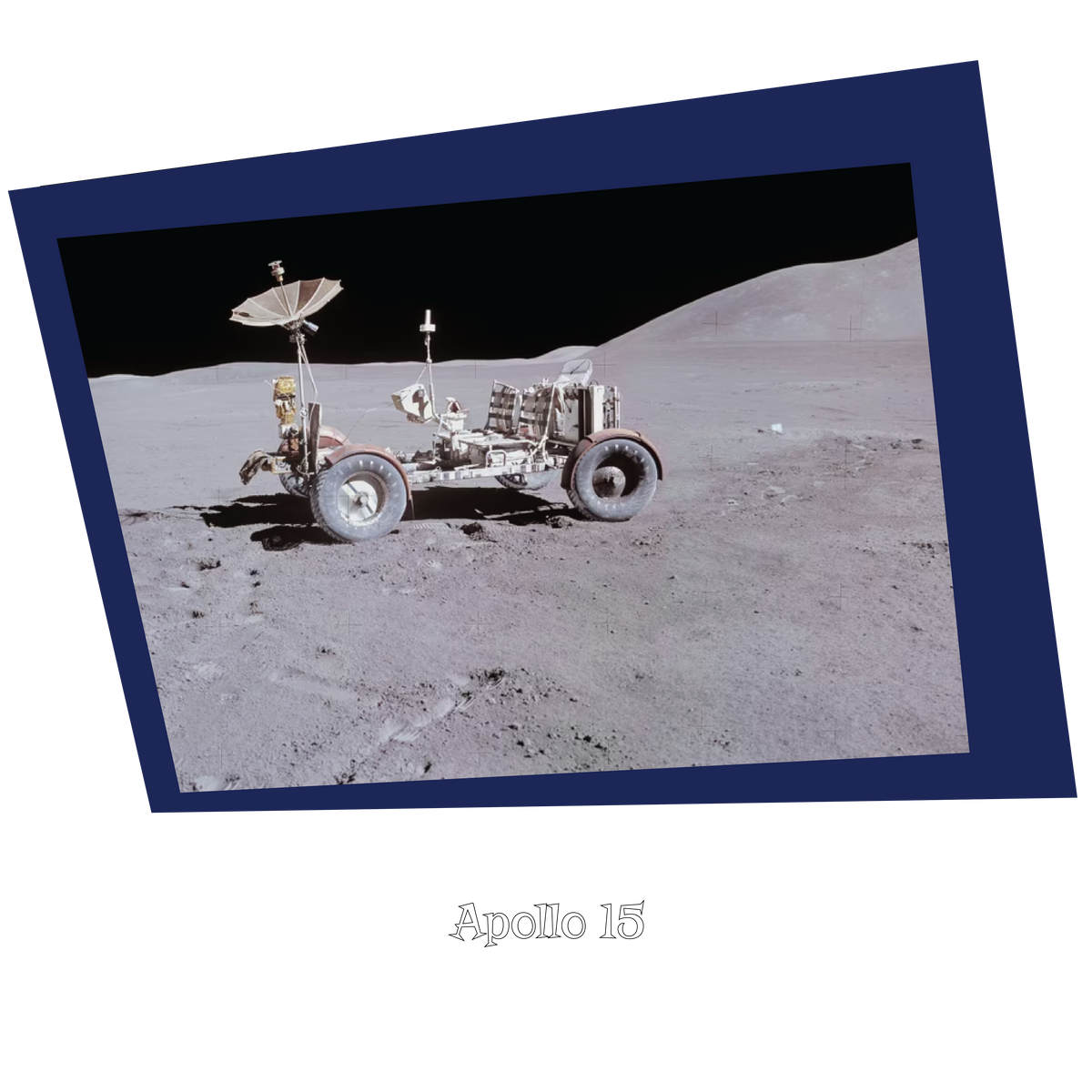
Four Wheels, One Mission: Explore
The LRV weighed about 460 lbs on Earth, but only about 77 lbs in lunar gravity
Powered by two non-rechargeable 36-volt silver-zinc batteries
Each wheel had its own electric motor for redundancy and traction
Navigation used a gyro and odometer system — no GPS
Powered by two non-rechargeable 36-volt silver-zinc batteries
Each wheel had its own electric motor for redundancy and traction
Navigation used a gyro and odometer system — no GPS

Science on Wheels
The rover carried cameras, tools, and the Apollo Lunar Surface Experiments Package (ALSEP)
It allowed astronauts to collect roughly 77 kg (170 lbs) of lunar samples on Apollo 15
It enabled exploration of Hadley Rille, one of the most geologically significant sites ever visited
The high-gain antenna transmitted live TV back to Earth
It allowed astronauts to collect roughly 77 kg (170 lbs) of lunar samples on Apollo 15
It enabled exploration of Hadley Rille, one of the most geologically significant sites ever visited
The high-gain antenna transmitted live TV back to Earth

Extending the Landing Zone
Apollo 15 astronauts traveled 17.5 miles (28 km) using the rover, over 10x farther than previous missions
The rover enabled exploration up to 5 miles (8 km) from the Lunar Module
Mission duration included 18+ hours of EVA, significantly expanded by rover mobility
The extended range allowed access to previously unreachable terrain, including elevated regions of the Hadley-Apennine site
The rover enabled exploration up to 5 miles (8 km) from the Lunar Module
Mission duration included 18+ hours of EVA, significantly expanded by rover mobility
The extended range allowed access to previously unreachable terrain, including elevated regions of the Hadley-Apennine site

Final Missions, Maximum Range
Apollo 17 (1972) recorded the longest rover distance: about 35.7 km (22.2 miles)
Mission duration included roughly 22 hours of EVA time using the rover
Improved driving techniques allowed higher speeds and better efficiency
The last time humans operated a vehicle on another world, to date
Mission duration included roughly 22 hours of EVA time using the rover
Improved driving techniques allowed higher speeds and better efficiency
The last time humans operated a vehicle on another world, to date


Translation missing: en.sections.mission.shop_the_mission
-
Lunar Rovers Hawaiian Shirt
Regular price $64.99 USDRegular price

First Drive on Another World
- Apollo 15 (1971) was the first mission to deploy the Lunar Roving Vehicle (LRV)
- The rover extended astronaut range from about 1 km on foot to over 27 km traveled
- Top speed reached roughly 8 mph (13 km/h) on the lunar surface
- The LRV was folded and stowed in the Lunar Module, then deployed after landing
Four Wheels, One Mission: Explore
- The LRV weighed about 460 lbs on Earth, but only about 77 lbs in lunar gravity
- Powered by two non-rechargeable 36-volt silver-zinc batteries
- Each wheel had its own electric motor for redundancy and traction
- Navigation used a gyro and odometer system — no GPS
Science on Wheels
- The rover carried cameras, tools, and the Apollo Lunar Surface Experiments Package (ALSEP)
- It allowed astronauts to collect roughly 77 kg (170 lbs) of lunar samples on Apollo 15
- It enabled exploration of Hadley Rille, one of the most geologically significant sites ever visited
- The high-gain antenna transmitted live TV back to Earth
Extending the Landing Zone
- Apollo 15 astronauts traveled 17.5 miles (28 km) using the rover, over 10x farther than previous missions
- The rover enabled exploration up to 5 miles (8 km) from the Lunar Module
- Mission duration included 18+ hours of EVA, significantly expanded by rover mobility
- The extended range allowed access to previously unreachable terrain, including elevated regions of the Hadley-Apennine site
Final Missions, Maximum Range
- Apollo 17 (1972) recorded the longest rover distance: about 35.7 km (22.2 miles)
- Mission duration included roughly 22 hours of EVA time using the rover
- Improved driving techniques allowed higher speeds and better efficiency
- The last time humans operated a vehicle on another world, to date
Across the Moon's surface, these machines carried humanity beyond its first steps. Continue the legacy.