




- Translation missing: en.sections.mission.launch_date
- 5 May 1961 (Freedom 7)
- Translation missing: en.sections.mission.vehicle
- Mercury-Redstone · Mercury-Atlas
- Translation missing: en.sections.mission.duration
- 1958–1963, 6 crewed flights
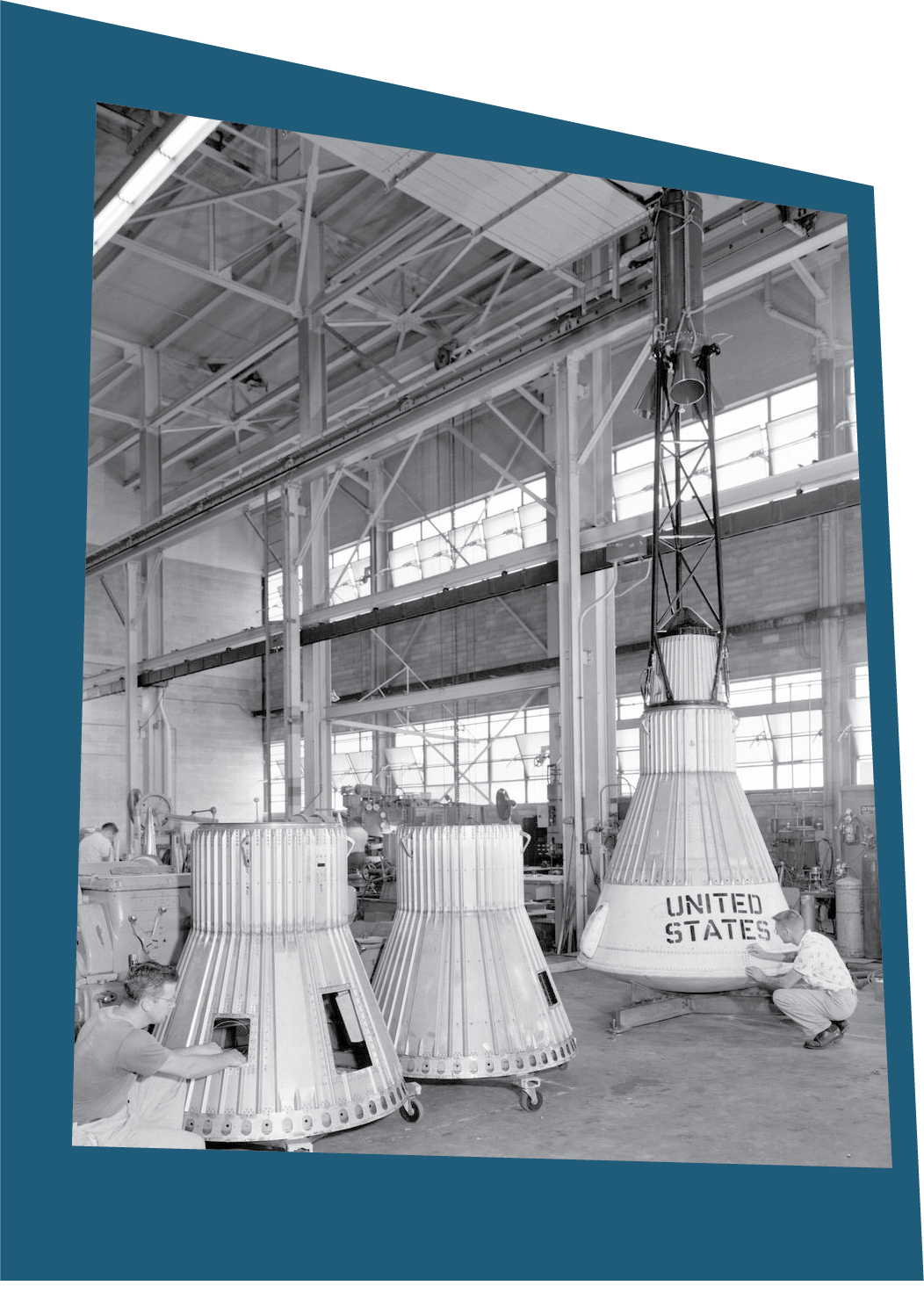
The Birth of Project Mercury: Testing for Space
Before launching astronauts, NASA tested Mercury capsules using the Little Joe rocket
These flights simulated emergency aborts, ensuring astronauts could survive a launch failure
The success of these tests meant one thing — America was ready to send a human into space
These flights simulated emergency aborts, ensuring astronauts could survive a launch failure
The success of these tests meant one thing — America was ready to send a human into space

Meet Ham: The First Space Chimp
Before humans, NASA sent a brave chimp named Ham into space on January 31, 1961
His flight proved that astronauts could function in weightlessness, a crucial test before human flight
Ham survived the trip and lived happily for 22 more years
His flight proved that astronauts could function in weightlessness, a crucial test before human flight
Ham survived the trip and lived happily for 22 more years

Training the First American Astronauts for the Unknown
Mercury astronauts underwent brutal training — centrifuge tests spun them at 9 Gs, pushing them to their limits
Capsule simulations helped them master controls in total darkness, preparing for reentry's fiery descent
Gordon Cooper flew the longest Mercury mission (Faith 7), spending over 34 hours in space
Capsule simulations helped them master controls in total darkness, preparing for reentry's fiery descent
Gordon Cooper flew the longest Mercury mission (Faith 7), spending over 34 hours in space

Alan Shepard Prepares for Flight
Alan Shepard sat waiting on May 5, 1961, seconds away from history
His spacecraft, Freedom 7, was no bigger than a telephone booth, yet it would carry him 116 miles above Earth
"Let's light this candle!" — Shepard's legendary words before liftoff still echo as a testament to bravery
His spacecraft, Freedom 7, was no bigger than a telephone booth, yet it would carry him 116 miles above Earth
"Let's light this candle!" — Shepard's legendary words before liftoff still echo as a testament to bravery
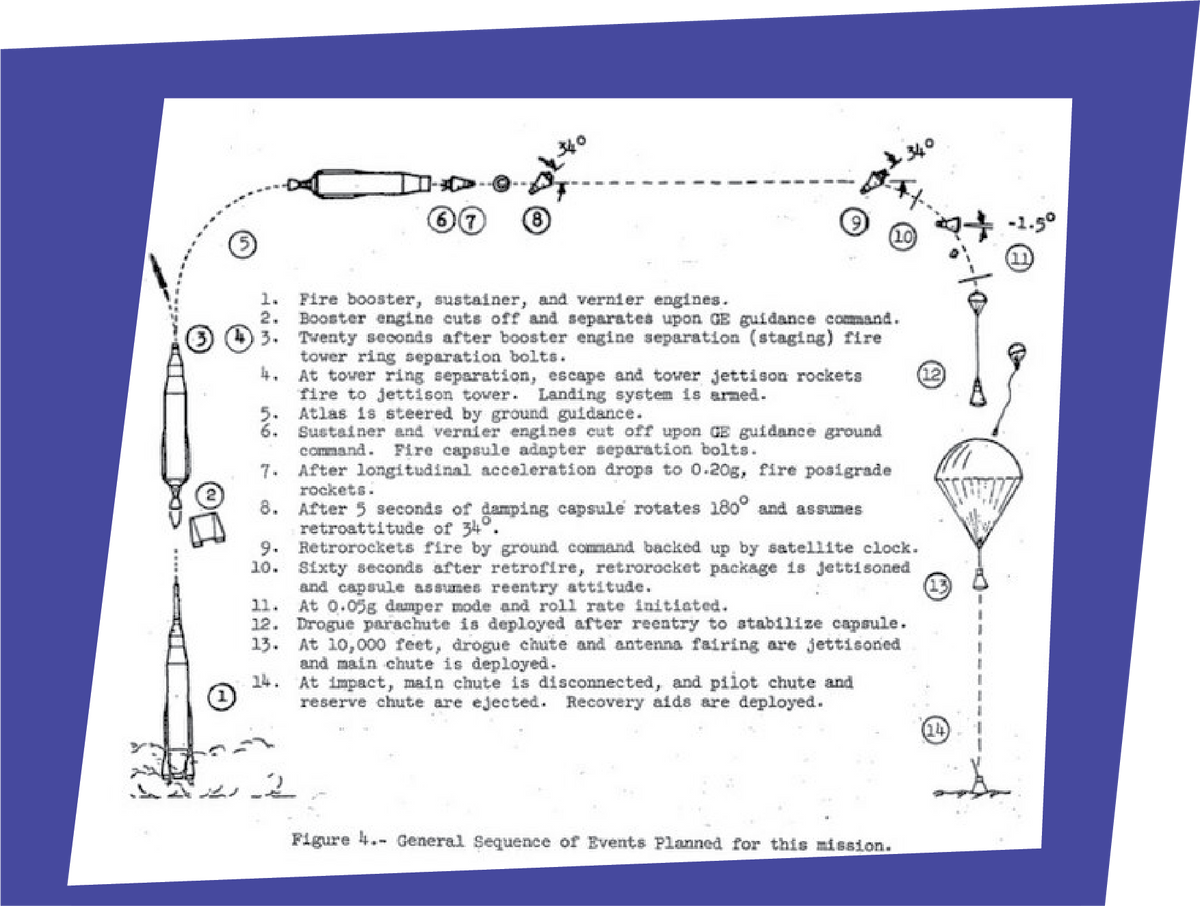
The Blueprint of the Mercury Mission
The Mercury capsule's controls were largely manual, requiring astronauts to pilot their spacecraft with hand-operated switches
An emergency escape tower could fire in milliseconds to save astronauts from failed launches
More than 250,000 engineers and technicians worked behind the scenes to make each Mercury mission possible
An emergency escape tower could fire in milliseconds to save astronauts from failed launches
More than 250,000 engineers and technicians worked behind the scenes to make each Mercury mission possible

Liftoff: The Redstone Rocket's Historic Journey
Mercury-Redstone 3 launched Shepard into space with a thunderous liftoff on May 5, 1961
Although the flight lasted just 15 minutes, it was a defining moment in the Space Race with the Soviet Union
Shepard's successful mission inspired President Kennedy's famous challenge: landing a man on the Moon before the end of the decade
Although the flight lasted just 15 minutes, it was a defining moment in the Space Race with the Soviet Union
Shepard's successful mission inspired President Kennedy's famous challenge: landing a man on the Moon before the end of the decade

The Moment of Splashdown: Recovery at Sea
Unlike later missions, Mercury astronauts returned to Earth by splashing down into the ocean at speeds of over 17,000 mph
Naval recovery teams had to locate the capsule quickly before it filled with water or drifted away
Shepard's capsule landed just 15 minutes after launch, and the recovery effort took place within minutes of hitting the water
Naval recovery teams had to locate the capsule quickly before it filled with water or drifted away
Shepard's capsule landed just 15 minutes after launch, and the recovery effort took place within minutes of hitting the water


Translation missing: en.sections.mission.shop_the_mission
-
Project Mercury Aloha Shirt — Dark
Regular price $39.99 USDRegular price$54.99 USDSale price $39.99 USDSale

Welcome to Project Mercury: America's first steps into space.
The Birth of Project Mercury: Testing for Space
- Before launching astronauts, NASA tested Mercury capsules using the Little Joe rocket
- These flights simulated emergency aborts, ensuring astronauts could survive a launch failure
- The success of these tests meant one thing — America was ready to send a human into space
Meet Ham: The First Space Chimp
- Before humans, NASA sent a brave chimp named Ham into space on January 31, 1961
- His flight proved that astronauts could function in weightlessness, a crucial test before human flight
- Ham survived the trip and lived happily for 22 more years
Training the First American Astronauts for the Unknown
- Mercury astronauts underwent brutal training — centrifuge tests spun them at 9 Gs, pushing them to their limits
- Capsule simulations helped them master controls in total darkness, preparing for reentry's fiery descent
- Gordon Cooper flew the longest Mercury mission (Faith 7), spending over 34 hours in space
Alan Shepard Prepares for Flight
- Alan Shepard sat waiting on May 5, 1961, seconds away from history
- His spacecraft, Freedom 7, was no bigger than a telephone booth, yet it would carry him 116 miles above Earth
- "Let's light this candle!" — Shepard's legendary words before liftoff still echo as a testament to bravery
The Blueprint of the Mercury Mission
- The Mercury capsule's controls were largely manual, requiring astronauts to pilot their spacecraft with hand-operated switches
- An emergency escape tower could fire in milliseconds to save astronauts from failed launches
- More than 250,000 engineers and technicians worked behind the scenes to make each Mercury mission possible
Liftoff: The Redstone Rocket's Historic Journey
- Mercury-Redstone 3 launched Shepard into space with a thunderous liftoff on May 5, 1961
- Although the flight lasted just 15 minutes, it was a defining moment in the Space Race with the Soviet Union
- Shepard's successful mission inspired President Kennedy's famous challenge: landing a man on the Moon before the end of the decade
The Moment of Splashdown: Recovery at Sea
- Unlike later missions, Mercury astronauts returned to Earth by splashing down into the ocean at speeds of over 17,000 mph
- Naval recovery teams had to locate the capsule quickly before it filled with water or drifted away
- Shepard's capsule landed just 15 minutes after launch, and the recovery effort took place within minutes of hitting the water
From chimpanzees to astronauts, from suborbital flights to splashdowns, Project Mercury was where America's space adventure truly began. Its legacy lives on in every mission that followed, proving that no frontier is beyond reach when courage and innovation come together.