




- Translation missing: en.sections.mission.launch_date
- 16 Jul 1969 (Apollo 11)
- Translation missing: en.sections.mission.vehicle
- Saturn IB · Saturn V
- Translation missing: en.sections.mission.duration
- 1961–1972

The Saturn Legacy: Powering the Apollo Era
The Saturn rocket family was the backbone of NASA's Apollo program. Born from the ambition to land humans on the Moon, these massive rockets pushed the boundaries of engineering and space exploration.
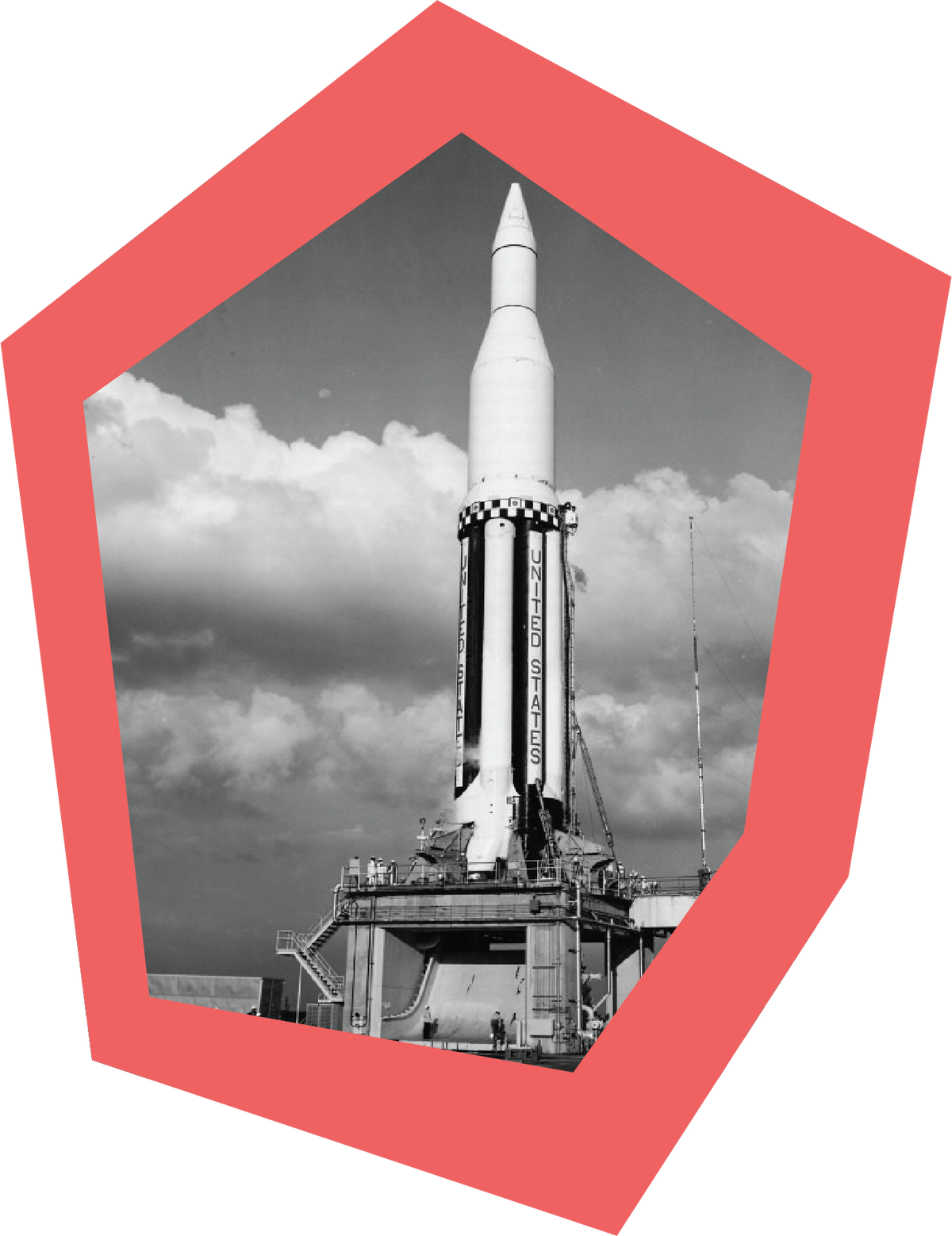
Saturn I: The First Giant Awakens
Launched in 1961, the Saturn I was NASA's first heavy-lift rocket designed for human spaceflight testing
With eight clustered engines, it was the most powerful American rocket of its time
Though it never carried humans, Saturn I's successful launches tested critical systems for future Apollo missions
With eight clustered engines, it was the most powerful American rocket of its time
Though it never carried humans, Saturn I's successful launches tested critical systems for future Apollo missions

Saturn IB: The Apollo Workhorse
The Saturn IB was the next step forward, capable of carrying heavier payloads, including crewed Apollo missions into Earth orbit
It launched critical missions like Apollo 7, the first crewed Apollo flight after the tragic Apollo 1 fire
With 1.5 million pounds of thrust, Saturn IB was used to launch astronauts to the Skylab space station in the 1970s
It launched critical missions like Apollo 7, the first crewed Apollo flight after the tragic Apollo 1 fire
With 1.5 million pounds of thrust, Saturn IB was used to launch astronauts to the Skylab space station in the 1970s

Saturn V: The Most Powerful Rocket Ever Built
Standing 363 feet tall — as tall as a 36-story building — the Saturn V is the most powerful rocket ever launched
Each launch produced 7.6 million pounds of thrust, enough to lift 310,000 pounds into orbit, roughly the weight of 400 cars
It powered the legendary Apollo 11 mission, carrying astronauts Neil Armstrong, Buzz Aldrin, and Michael Collins to the Moon
No Saturn V rocket ever failed in flight — every single mission succeeded in reaching space
Each launch produced 7.6 million pounds of thrust, enough to lift 310,000 pounds into orbit, roughly the weight of 400 cars
It powered the legendary Apollo 11 mission, carrying astronauts Neil Armstrong, Buzz Aldrin, and Michael Collins to the Moon
No Saturn V rocket ever failed in flight — every single mission succeeded in reaching space

Saturn V and Skylab: Building America's First Space Station
After Apollo, the Saturn V launched Skylab, America's first space station, into orbit in 1973
The space station weighed 170,000 pounds, the heaviest payload ever launched by a rocket at that time
Skylab proved humans could live and work in space for months at a time, setting the foundation for future long-term missions
Over 270 scientific experiments were conducted on Skylab, paving the way for the ISS
The space station weighed 170,000 pounds, the heaviest payload ever launched by a rocket at that time
Skylab proved humans could live and work in space for months at a time, setting the foundation for future long-term missions
Over 270 scientific experiments were conducted on Skylab, paving the way for the ISS


Translation missing: en.sections.mission.shop_the_mission
-
Saturn-Apollo Program Shirt
Regular price $39.99 USDRegular price

The Saturn Legacy: Powering the Apollo Era
The Saturn rocket family was the backbone of NASA's Apollo program. Born from the ambition to land humans on the Moon, these massive rockets pushed the boundaries of engineering and space exploration.
Saturn I: The First Giant Awakens
- Launched in 1961, the Saturn I was NASA's first heavy-lift rocket designed for human spaceflight testing
- With eight clustered engines, it was the most powerful American rocket of its time
- Though it never carried humans, Saturn I's successful launches tested critical systems for future Apollo missions
Saturn IB: The Apollo Workhorse
- The Saturn IB was the next step forward, capable of carrying heavier payloads, including crewed Apollo missions into Earth orbit
- It launched critical missions like Apollo 7, the first crewed Apollo flight after the tragic Apollo 1 fire
- With 1.5 million pounds of thrust, Saturn IB was used to launch astronauts to the Skylab space station in the 1970s
Saturn V: The Most Powerful Rocket Ever Built
- Standing 363 feet tall — as tall as a 36-story building — the Saturn V is the most powerful rocket ever launched
- Each launch produced 7.6 million pounds of thrust, enough to lift 310,000 pounds into orbit, roughly the weight of 400 cars
- It powered the legendary Apollo 11 mission, carrying astronauts Neil Armstrong, Buzz Aldrin, and Michael Collins to the Moon
- No Saturn V rocket ever failed in flight — every single mission succeeded in reaching space
Saturn V and Skylab: Building America's First Space Station
- After Apollo, the Saturn V launched Skylab, America's first space station, into orbit in 1973
- The space station weighed 170,000 pounds, the heaviest payload ever launched by a rocket at that time
- Skylab proved humans could live and work in space for months at a time, setting the foundation for future long-term missions
- Over 270 scientific experiments were conducted on Skylab, paving the way for the ISS