




- Translation missing: en.sections.mission.launch_date
- 14 Oct 1947 (X-1, Mach 1)
- Translation missing: en.sections.mission.vehicle
- Bell X-1 · Douglas D-558 · North American X-15
- Translation missing: en.sections.mission.duration
- 1946–present

Bell X-1
The Bell X-1 was the first X-plane to fly and break the sound barrier, on October 14, 1947
Piloted by U.S. Air Force Capt. Charles E. "Chuck" Yeager, the X-1 reached a speed of 700 mph, Mach 1.06
It flew a total of 78 times, and on March 26, 1948, Yeager attained a speed of 957 mph, Mach 1.45, at an altitude of 71,900 feet
The airplane was named "Glamorous Glennis" by Yeager as a tribute to his wife

Douglas X-3 Stiletto
The X-3 flew 26 flights between 1952 and 1955
Designed for Mach 2, but only reached Mach 1
The X-3 is now on display in the National Museum of the United States Air Force in Dayton, Ohio

Northrop X-4 Bantam
Northrop Aircraft Company was commissioned on June 11, 1946, to build two X-4s
The aircraft was compact, with only 45 minutes of fuel supply
The first flight was on December 15, 1948, with Northrop test pilot Charles Tucker
Testing and modifications through its 81st and final flight in 1953 determined that a swept-wing semi-tailless design was not suitable for speeds near Mach 1

North American X-15
First flown in 1959, the North American X-15 was the first winged aircraft to fly Mach 4, 5, and 6
The program saw 199 flights over 10 years and set the world's unofficial speed and altitude records of 4,520 mph (Mach 6.7) and 354,200 feet
The success of the program contributed to the development of the Mercury, Gemini, Apollo, and Space Shuttle piloted spaceflight programs
In 1967 the X-15 #3 had a technical issue with the adaptive flight control system, tragically resulting in the loss of the pilot
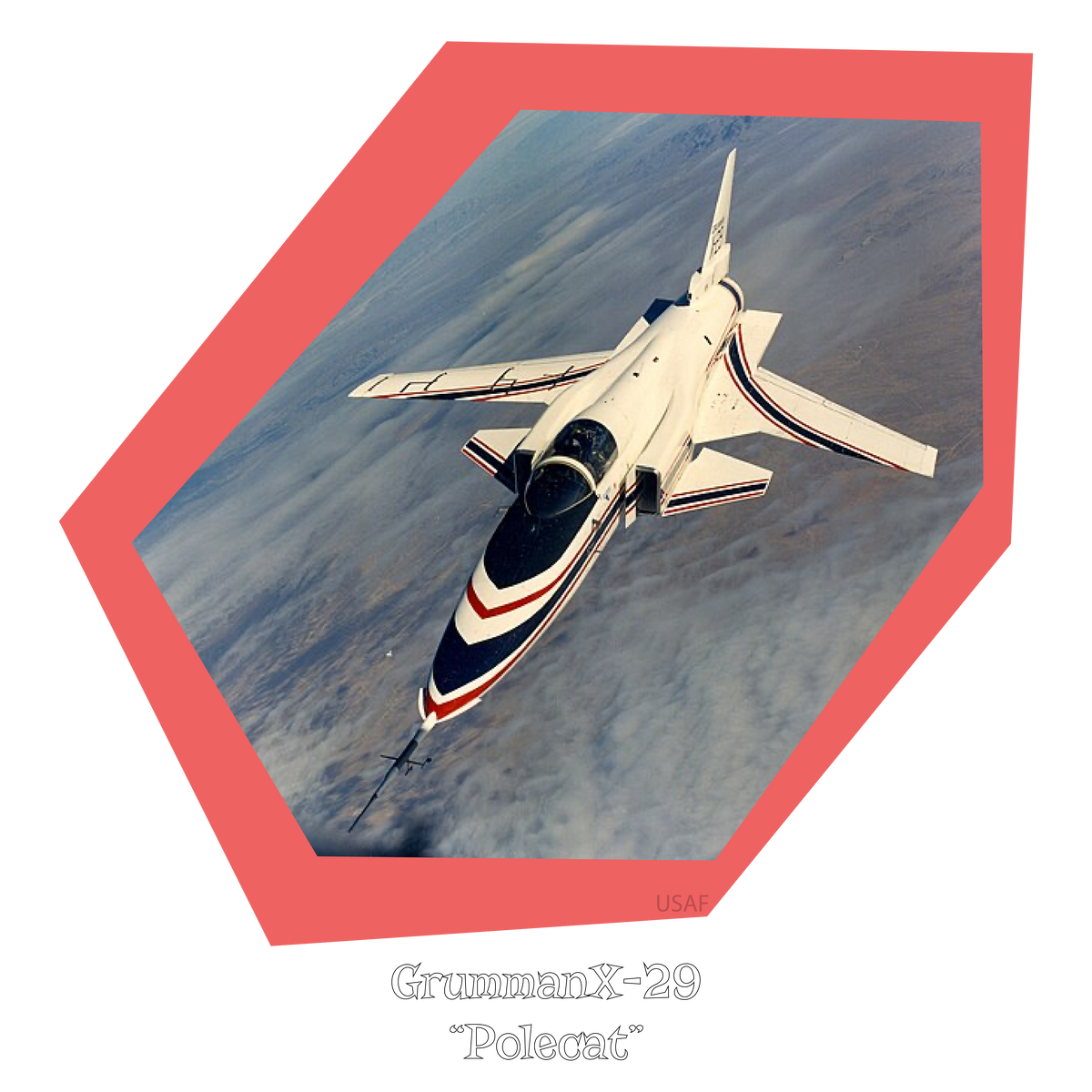
Grumman X-29 Polecat
First flight of the No. 1 X-29 was December 14, 1984, while the No. 2 aircraft first flew on May 23, 1989
The X-29 did not demonstrate the overall reduction in aerodynamic drag
The program did demonstrate new uses of proven technologies, including aeroelastic tailoring to control structural divergence and use of a relatively large, close-coupled canard for longitudinal control
With over 400 test flights, the X-29 reached Mach 1.8

X-37B OTV
This secretive, unmanned spacecraft orbits the Earth, conducting experiments and gathering intelligence
First flight was April 22, 2010
The X-37B lands on runways like a regular plane, making it one of the few reusable spacecraft in operation today
After 908 days in orbit, the 6th mission of the X-37B was retrieved in November 2022
Falcon Heavy launched the 7th mission in December 2023 from LC-39A

XB-70 Valkyrie
The XB-70 Valkyrie was a prototype strategic bomber designed to fly at high altitudes and over Mach 3 (over 2,000 mph)
The Valkyrie never entered production, but was a technological marvel and influenced future aircraft designs
The aircraft featured a canard foreplane and folding wingtips to enhance stability and control at supersonic speeds


Translation missing: en.sections.mission.shop_the_mission
-
X-Plane Tribal Hawaiian Shirt
Regular price $59.99 USDRegular price

Bell X-1
NASA's Experimental Aircraft (X-Planes) program began in 1944 as a collaboration between the National Advisory Committee for Aeronautics (NACA, now NASA), the U.S. Navy, and the U.S. Army Air Forces. The purpose of the program was to build aircraft that would push the boundaries of aviation, including breaking speed and altitude barriers, and testing new technologies.
- The Bell X-1 was the first X-plane to fly and break the sound barrier, on October 14, 1947
- Piloted by U.S. Air Force Capt. Charles E. "Chuck" Yeager, the X-1 reached a speed of 700 mph, Mach 1.06
- It flew a total of 78 times, and on March 26, 1948, Yeager attained a speed of 957 mph, Mach 1.45, at an altitude of 71,900 feet
- The airplane was named "Glamorous Glennis" by Yeager as a tribute to his wife
Douglas X-3 Stiletto
Designed to explore the challenges of supersonic flight, with its slender fuselage and needle-like nose.
- The X-3 flew 26 flights between 1952 and 1955
- Designed for Mach 2, but only reached Mach 1
- The X-3 is now on display in the National Museum of the United States Air Force in Dayton, Ohio
Northrop X-4 Bantam
The X-4 was designed to test a semi-tailless wing configuration at transonic speeds.
- Northrop Aircraft Company was commissioned on June 11, 1946, to build two X-4s
- The aircraft was compact, with only 45 minutes of fuel supply
- The first flight was on December 15, 1948, with Northrop test pilot Charles Tucker
- Testing and modifications through its 81st and final flight in 1953 determined that a swept-wing semi-tailless design was not suitable for speeds near Mach 1
North American X-15
Engineered to test piloted hypersonic flight within and outside the Earth's atmosphere.
- First flown in 1959, the North American X-15 was the first winged aircraft to fly Mach 4, 5, and 6
- The program saw 199 flights over 10 years and set the world's unofficial speed and altitude records of 4,520 mph (Mach 6.7) and 354,200 feet
- The success of the program contributed to the development of the Mercury, Gemini, Apollo, and Space Shuttle piloted spaceflight programs
- In 1967 the X-15 #3 had a technical issue with the adaptive flight control system, tragically resulting in the loss of the pilot
Grumman X-29 Polecat
Designed to explore the forward-swept wing concept, test improved lift qualities in extreme maneuvers, reduce aerodynamic drag, and fly more efficiently at cruise speeds.
- First flight of the No. 1 X-29 was December 14, 1984, while the No. 2 aircraft first flew on May 23, 1989
- The X-29 did not demonstrate the overall reduction in aerodynamic drag
- The program did demonstrate new uses of proven technologies, including aeroelastic tailoring to control structural divergence and use of a relatively large, close-coupled canard for longitudinal control
- With over 400 test flights, the X-29 reached Mach 1.8
X-37B OTV
The X-37B is a small, robotic spaceplane built for long-duration, high-tech missions in low Earth orbit.
- This secretive, unmanned spacecraft orbits the Earth, conducting experiments and gathering intelligence
- First flight was April 22, 2010
- The X-37B lands on runways like a regular plane, making it one of the few reusable spacecraft in operation today
- After 908 days in orbit, the 6th mission of the X-37B was retrieved in November 2022
- Falcon Heavy launched the 7th mission in December 2023 from LC-39A
XB-70 Valkyrie
Designed to carry nuclear bombs, it became a testbed for supersonic flight research.
- The XB-70 Valkyrie was a prototype strategic bomber designed to fly at high altitudes and over Mach 3 (over 2,000 mph)
- The Valkyrie never entered production, but was a technological marvel and influenced future aircraft designs
- The aircraft featured a canard foreplane and folding wingtips to enhance stability and control at supersonic speeds
We honor U.S. service members whose sacrifices fueled aviation and space exploration.