




- Translation missing: en.sections.mission.launch_date
- 14 Oct 1947 (X-1, Mach 1)
- Translation missing: en.sections.mission.vehicle
- Bell X-1 · Douglas X-3 Stiletto · Northrop X-4 Bantam · Grumman X-29 · North American XB-70
- Translation missing: en.sections.mission.duration
- 1947–1984

X-1: Glamorous Glennis
The Bell X-1 was the first X-plane to fly and break the sound barrier, on October 14, 1947
Piloted by U.S. Air Force Capt. Charles E. "Chuck" Yeager, the X-1 reached a speed of 700 mph, Mach 1.06
It flew a total of 78 times, and on March 26, 1948, Yeager attained a speed of 957 mph, Mach 1.45, at an altitude of 71,900 feet
The airplane was named "Glamorous Glennis" by Yeager as a tribute to his wife
Piloted by U.S. Air Force Capt. Charles E. "Chuck" Yeager, the X-1 reached a speed of 700 mph, Mach 1.06
It flew a total of 78 times, and on March 26, 1948, Yeager attained a speed of 957 mph, Mach 1.45, at an altitude of 71,900 feet
The airplane was named "Glamorous Glennis" by Yeager as a tribute to his wife

X-3: Stiletto
Designed to explore the challenges of supersonic flight, with its slender fuselage and needle-like nose.
The X-3 flew 26 flights between 1952 and 1955
Designed for Mach 2, but only reached Mach 1
The X-3 is now on display in the National Museum of the United States Air Force in Dayton, Ohio
The X-3 flew 26 flights between 1952 and 1955
Designed for Mach 2, but only reached Mach 1
The X-3 is now on display in the National Museum of the United States Air Force in Dayton, Ohio
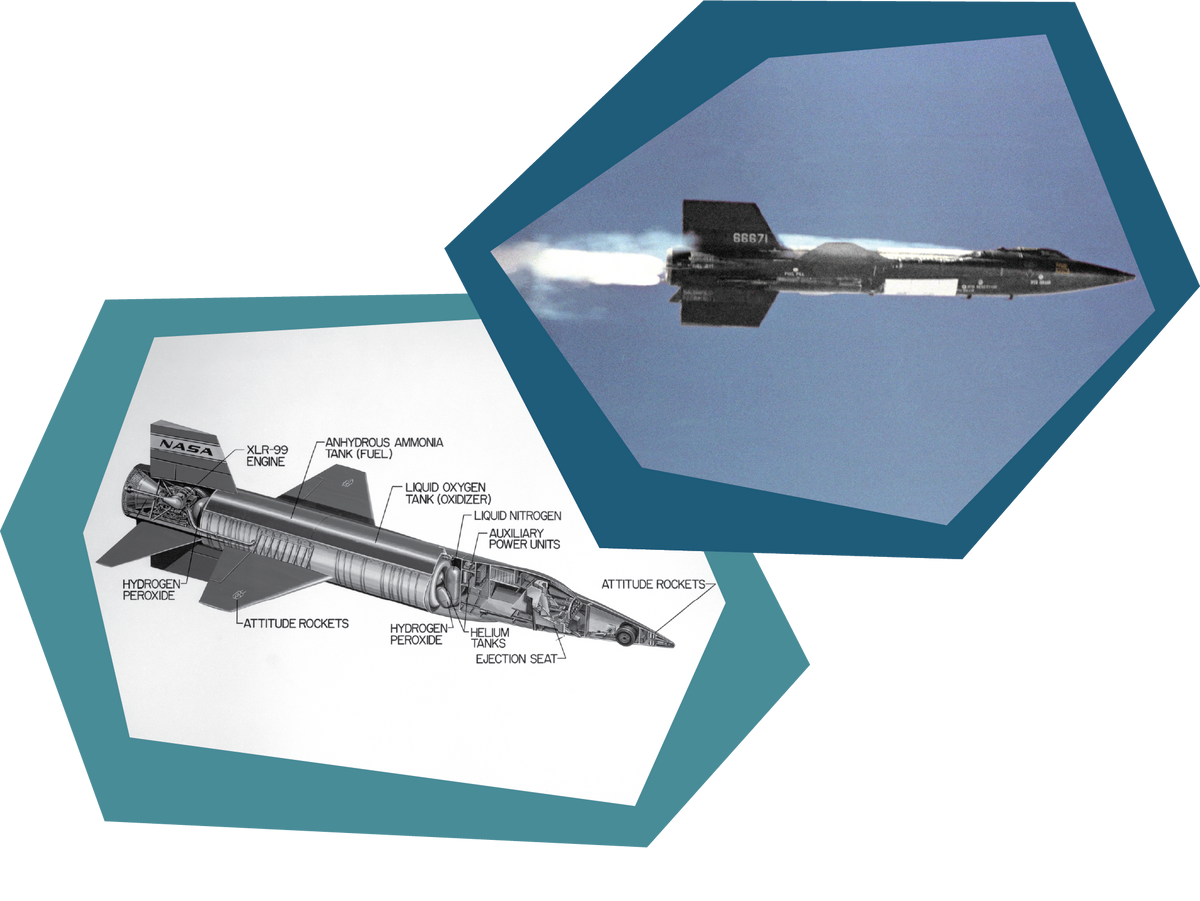
X-15: Hypersonic Starship
First flown in 1959, the North American X-15 was the first winged aircraft to fly Mach 4, 5, and 6
The program saw 199 flights over 10 years and set the world's unofficial speed and altitude records of 4,520 mph (Mach 6.7) and 354,200 feet
The success of the program contributed to the development of the Mercury, Gemini, Apollo, and Space Shuttle piloted spaceflight programs
In 1967 the X-15 #3 had a technical issue with the adaptive flight control system, tragically resulting in the loss of the pilot
The program saw 199 flights over 10 years and set the world's unofficial speed and altitude records of 4,520 mph (Mach 6.7) and 354,200 feet
The success of the program contributed to the development of the Mercury, Gemini, Apollo, and Space Shuttle piloted spaceflight programs
In 1967 the X-15 #3 had a technical issue with the adaptive flight control system, tragically resulting in the loss of the pilot
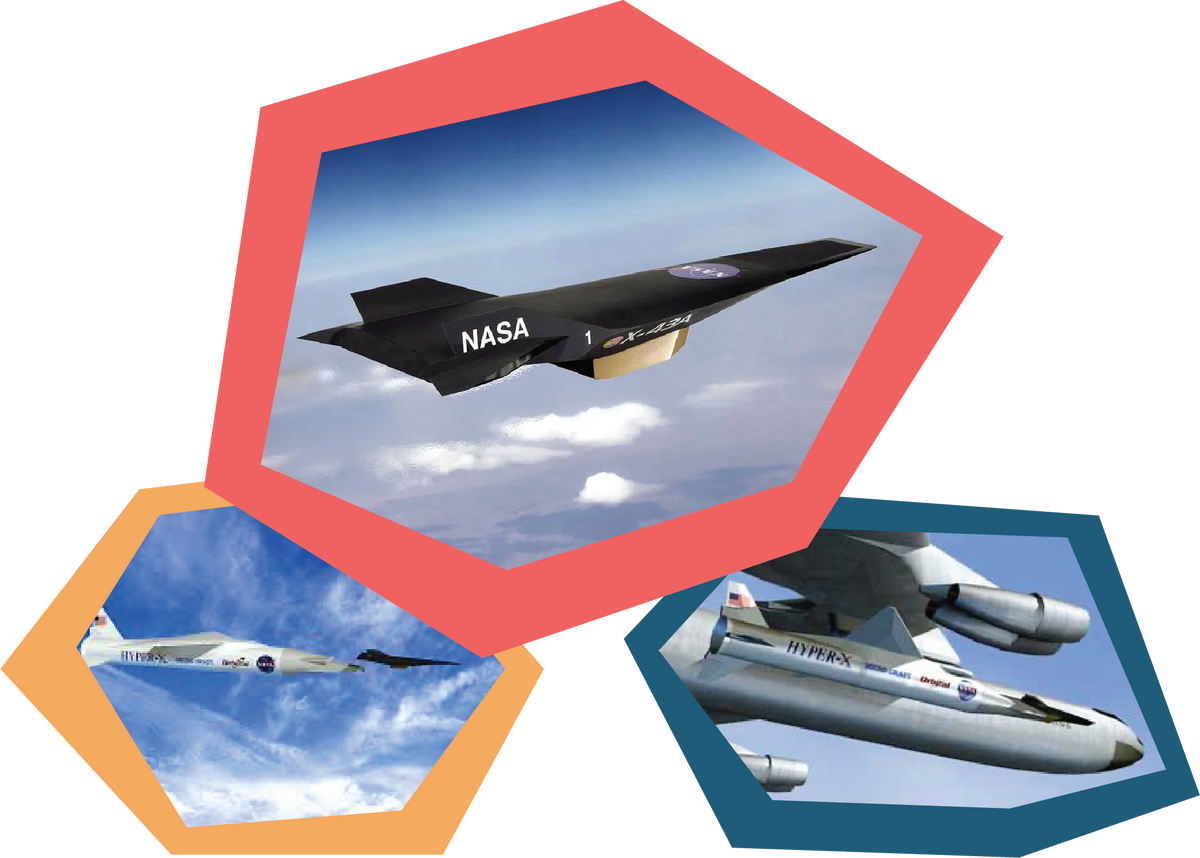
X-43A: The Hyper-X
This uninhabited vehicle holds the world record for the fastest air-breathing aircraft, achieving Mach 9.6 (6,860 mph) in 2004
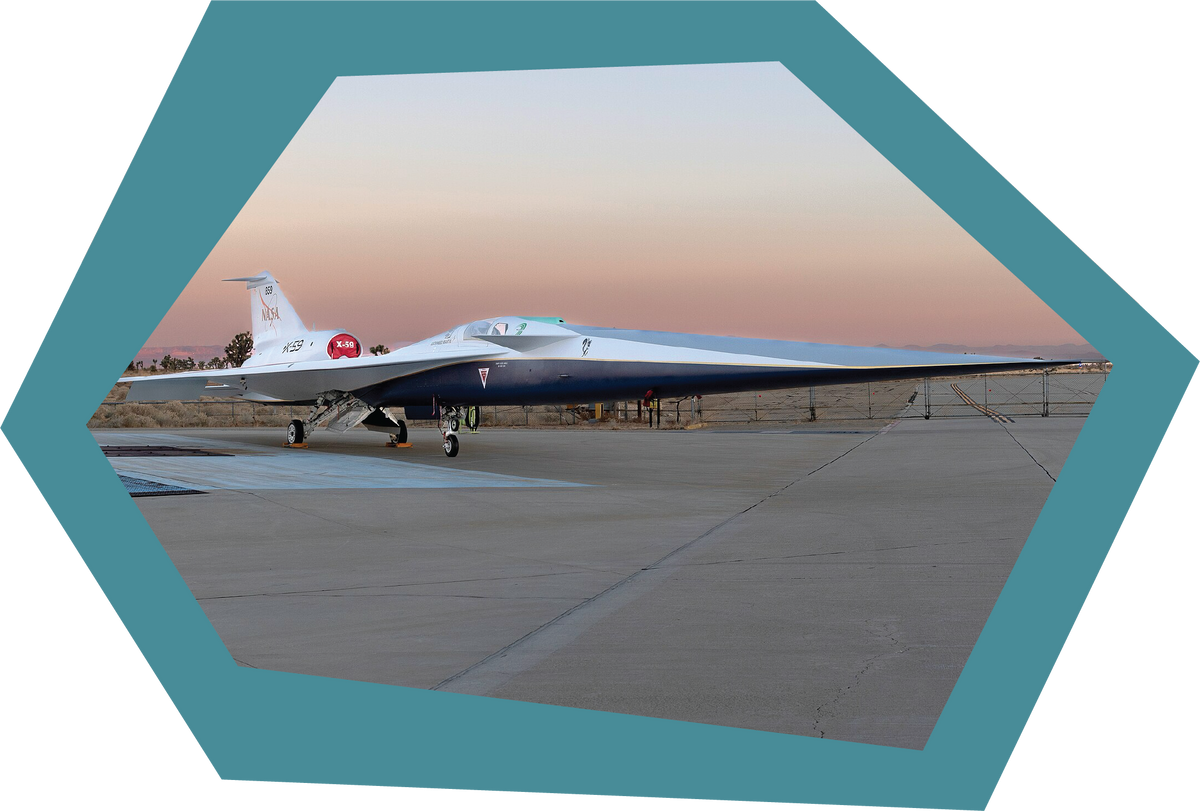
X-59: QueSST
The "silent" supersonic jet: its primary mission is to reduce a standard sonic boom to a quiet "sonic thump" (75 PLdB)
Designed with extreme length: it features an incredibly long, sharp nose that makes up about a third of its length, which is key to diffusing the shockwaves before they can form a loud boom
The pilot relies on an external Vision System (XVS), using high-resolution cameras and monitors instead of a forward-facing windshield
Designed with extreme length: it features an incredibly long, sharp nose that makes up about a third of its length, which is key to diffusing the shockwaves before they can form a loud boom
The pilot relies on an external Vision System (XVS), using high-resolution cameras and monitors instead of a forward-facing windshield


Translation missing: en.sections.mission.shop_the_mission
-
X-Planes Hawaiian Shirt
Regular price $59.99 USDRegular price

X-1: Glamorous Glennis
- The Bell X-1 was the first X-plane to fly and break the sound barrier, on October 14, 1947
- Piloted by U.S. Air Force Capt. Charles E. "Chuck" Yeager, the X-1 reached a speed of 700 mph, Mach 1.06
- It flew a total of 78 times, and on March 26, 1948, Yeager attained a speed of 957 mph, Mach 1.45, at an altitude of 71,900 feet
- The airplane was named "Glamorous Glennis" by Yeager as a tribute to his wife
X-3: Stiletto
Designed to explore the challenges of supersonic flight, with its slender fuselage and needle-like nose.
- The X-3 flew 26 flights between 1952 and 1955
- Designed for Mach 2, but only reached Mach 1
- The X-3 is now on display in the National Museum of the United States Air Force in Dayton, Ohio
X-15: Hypersonic Starship
- First flown in 1959, the North American X-15 was the first winged aircraft to fly Mach 4, 5, and 6
- The program saw 199 flights over 10 years and set the world's unofficial speed and altitude records of 4,520 mph (Mach 6.7) and 354,200 feet
- The success of the program contributed to the development of the Mercury, Gemini, Apollo, and Space Shuttle piloted spaceflight programs
- In 1967 the X-15 #3 had a technical issue with the adaptive flight control system, tragically resulting in the loss of the pilot
X-43A: The Hyper-X
- This uninhabited vehicle holds the world record for the fastest air-breathing aircraft, achieving Mach 9.6 (6,860 mph) in 2004
X-59: QueSST
- The "silent" supersonic jet: its primary mission is to reduce a standard sonic boom to a quiet "sonic thump" (75 PLdB)
- Designed with extreme length: it features an incredibly long, sharp nose that makes up about a third of its length, which is key to diffusing the shockwaves before they can form a loud boom
- The pilot relies on an external Vision System (XVS), using high-resolution cameras and monitors instead of a forward-facing windshield
The experimental elite: where pioneering designs meet the extreme limits of flight. Celebrate the bold engineers who dared to dream.