




- Translation missing: en.sections.mission.launch_date
- 8 Apr 1964 (Gemini-Titan 1)
- Translation missing: en.sections.mission.vehicle
- Titan II GLV · Titan IIIC
- Translation missing: en.sections.mission.duration
- Titan family 1959–2005
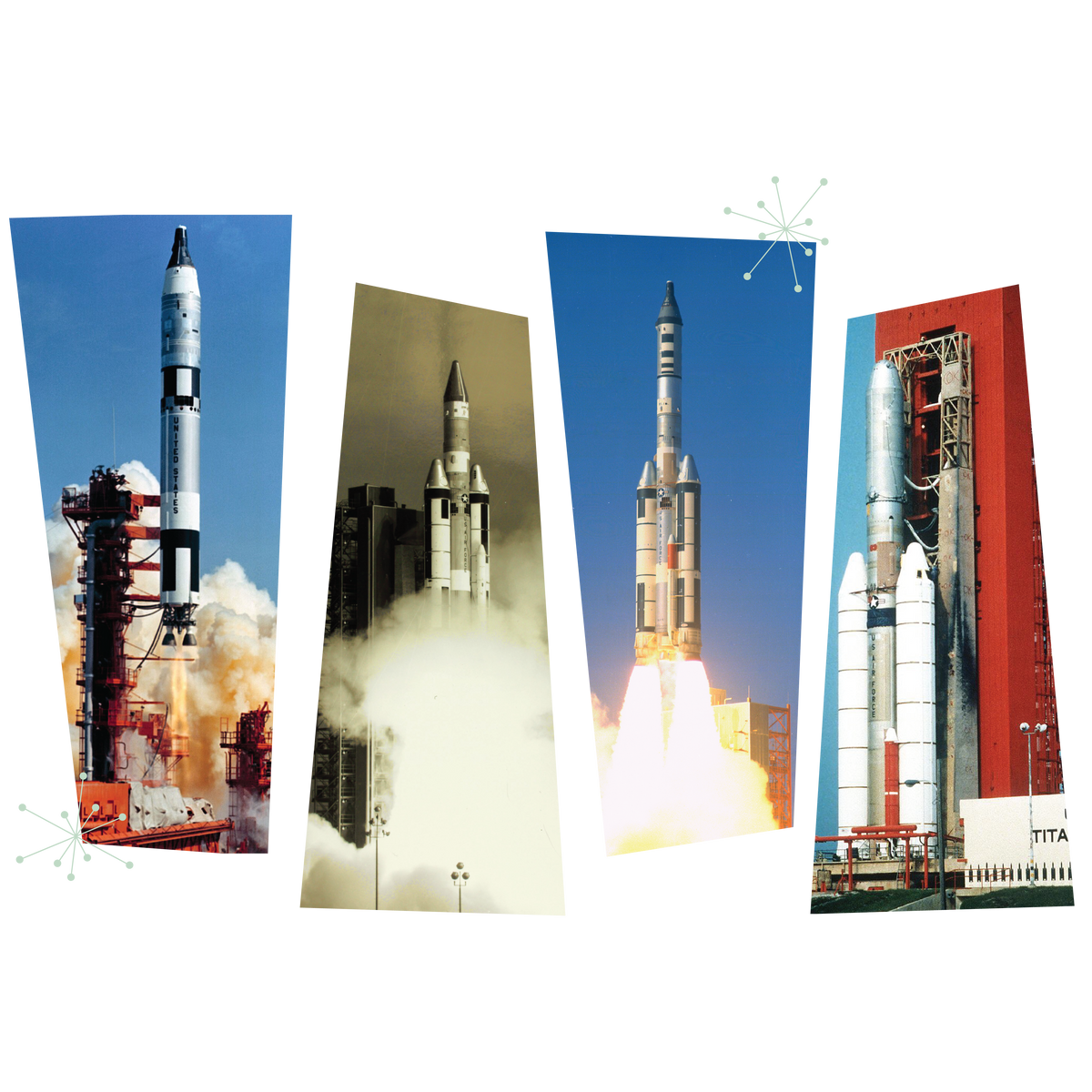
The Age of Titan: America's Heavy-Lift Legacy
Titan was a family of United States expendable rockets used between 1959 and 2005.
The Titan family began as intercontinental ballistic missiles (ICBMs) during the Cold War, but quickly evolved into some of NASA's most reliable space launch vehicles
The Titan family began as intercontinental ballistic missiles (ICBMs) during the Cold War, but quickly evolved into some of NASA's most reliable space launch vehicles
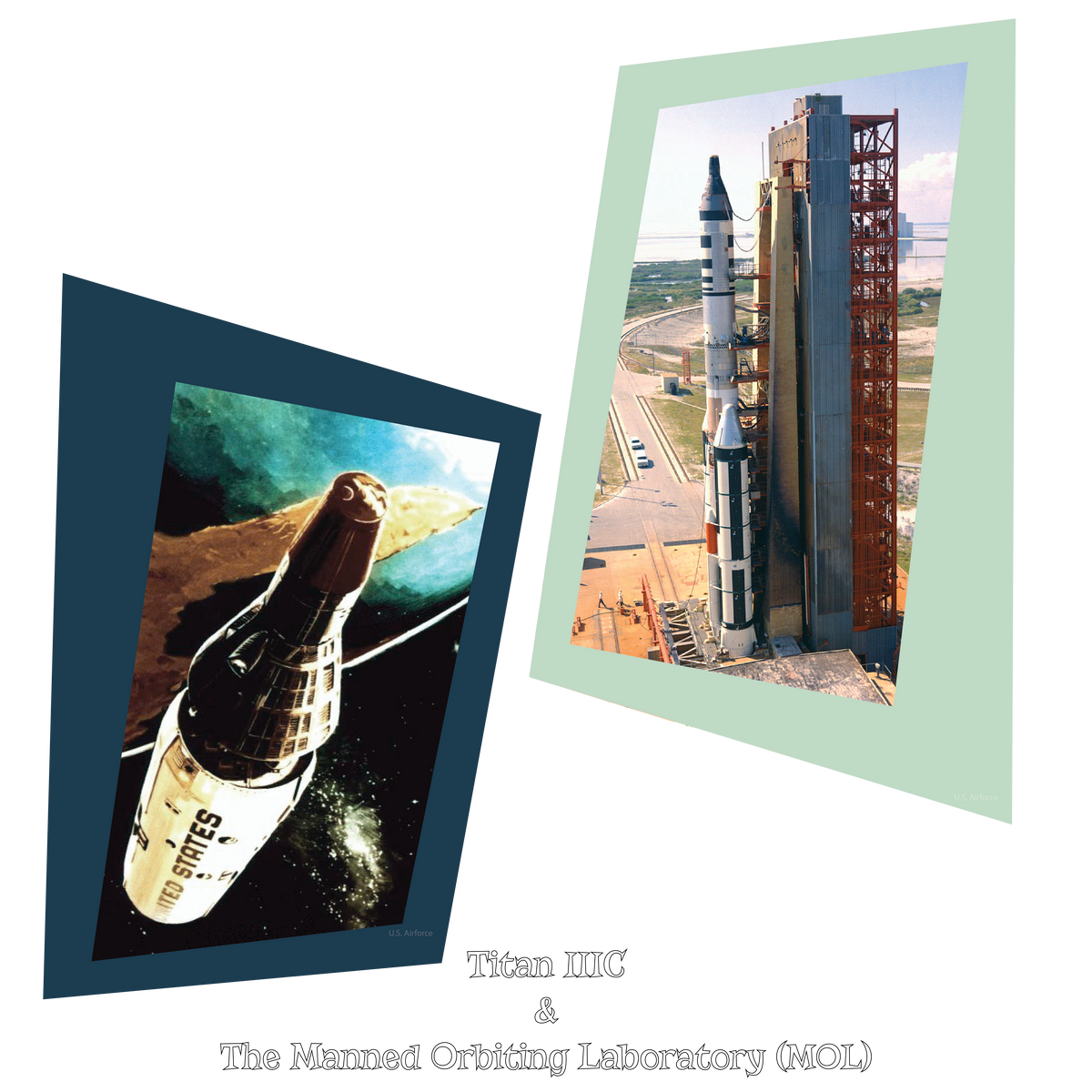
Titan IIIC MOL: The Space Station That Never Was
The Titan IIIC was designed to launch the ambitious Manned Orbiting Laboratory (MOL) — America's secretive military space station project of the 1960s
The MOL would have served as a spy platform for military astronauts, but the project was canceled in 1969
The Titan IIIC went on to become a powerful booster for satellites and experimental missions
The MOL would have served as a spy platform for military astronauts, but the project was canceled in 1969
The Titan IIIC went on to become a powerful booster for satellites and experimental missions

Dyna-Soar: The X-Wing of Its Time
The Dyna-Soar was a reusable spaceplane designed to glide back to Earth after missions — think of it as the great-grandfather of the Space Shuttle
Training missions included military reconnaissance, bombing, and space rescue
Dyna-Soar never launched, but the technology influenced future aerospace designs, including modern spaceplanes like the X-37B
Training missions included military reconnaissance, bombing, and space rescue
Dyna-Soar never launched, but the technology influenced future aerospace designs, including modern spaceplanes like the X-37B

Gemini IV: America's First Spacewalk
Launched by a Titan II rocket, Gemini IV carried Ed White to become the first American to walk in space on June 3, 1965
White's spacewalk lasted 23 minutes — and he didn't want to come back inside. His words: "I'm coming back in... reluctantly."
The mission proved astronauts could function outside their spacecraft, paving the way for Project Apollo
White's spacewalk lasted 23 minutes — and he didn't want to come back inside. His words: "I'm coming back in... reluctantly."
The mission proved astronauts could function outside their spacecraft, paving the way for Project Apollo

Gemini-Agena: The First Rendezvous in Space
The Agena Target Vehicle, launched atop a Titan II rocket, was part of the first-ever docking in space with Gemini VIII in 1966
This maneuver was critical for developing the docking procedures needed for the Apollo missions
Though technical failures plagued the early launches, the eventual success of the Gemini-Agena missions became a pivotal moment in space navigation history
This maneuver was critical for developing the docking procedures needed for the Apollo missions
Though technical failures plagued the early launches, the eventual success of the Gemini-Agena missions became a pivotal moment in space navigation history


Translation missing: en.sections.mission.shop_the_mission
-
Age of The Titan
Regular price $39.99 USDRegular price

The Age of Titan: America's Heavy-Lift Legacy
Titan was a family of United States expendable rockets used between 1959 and 2005.
- The Titan family began as intercontinental ballistic missiles (ICBMs) during the Cold War, but quickly evolved into some of NASA's most reliable space launch vehicles
Titan IIIC MOL: The Space Station That Never Was
- The Titan IIIC was designed to launch the ambitious Manned Orbiting Laboratory (MOL) — America's secretive military space station project of the 1960s
- The MOL would have served as a spy platform for military astronauts, but the project was canceled in 1969
- The Titan IIIC went on to become a powerful booster for satellites and experimental missions
Dyna-Soar: The X-Wing of Its Time
- The Dyna-Soar was a reusable spaceplane designed to glide back to Earth after missions — think of it as the great-grandfather of the Space Shuttle
- Training missions included military reconnaissance, bombing, and space rescue
- Dyna-Soar never launched, but the technology influenced future aerospace designs, including modern spaceplanes like the X-37B
Gemini IV: America's First Spacewalk
- Launched by a Titan II rocket, Gemini IV carried Ed White to become the first American to walk in space on June 3, 1965
- White's spacewalk lasted 23 minutes — and he didn't want to come back inside. His words: "I'm coming back in... reluctantly."
- The mission proved astronauts could function outside their spacecraft, paving the way for Project Apollo
Gemini-Agena: The First Rendezvous in Space
- The Agena Target Vehicle, launched atop a Titan II rocket, was part of the first-ever docking in space with Gemini VIII in 1966
- This maneuver was critical for developing the docking procedures needed for the Apollo missions
- Though technical failures plagued the early launches, the eventual success of the Gemini-Agena missions became a pivotal moment in space navigation history
The Titan family of rockets wasn't just about launching missions — it was about pushing the limits of what space technology could achieve. Without Titan, there would be no Gemini program, no Space Shuttle, and no foundation for today's heavy-lift rockets like the Falcon Heavy or SLS.