
NOVELTY, ANIMALS
& ABSTRACT SPACE
NOVELTY, ANIMALS& ABSTRACT SPACE

The lighter side of the space race

Starry Sunflower Hawaiian Shirt - Cape Kennedy Clothing

THE UNLIKELY ASTRONAUTS

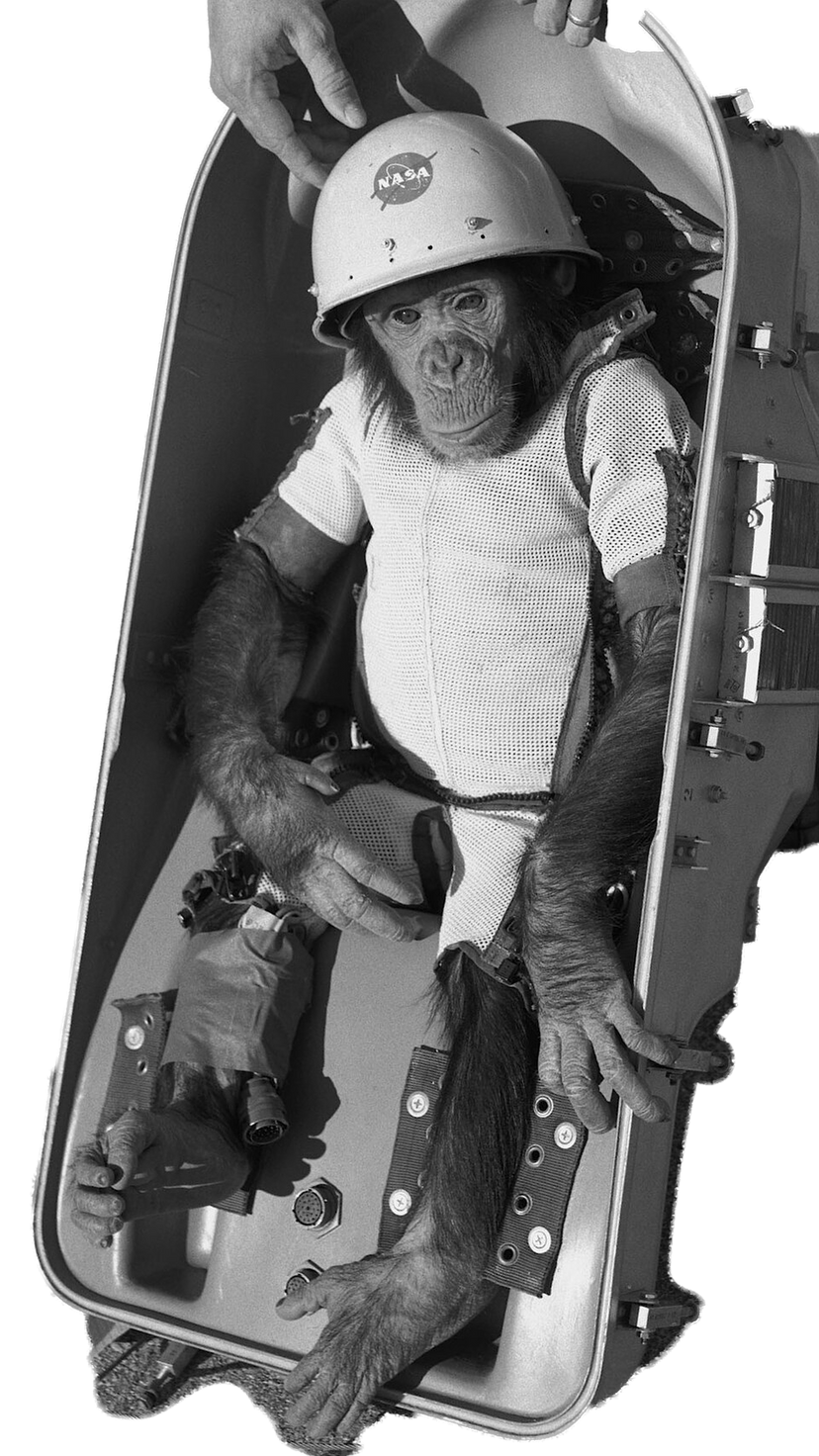
Before any human flew, the animals went first. Miss Baker rode a Jupiter missile 300 miles up and came home to decades of fan mail. Ham the chimpanzee worked his levers in weightlessness and proved a living mind could do a job up there. And in 1963, Félicette — the first and only cat in space — flew for France. Every astronaut who followed owes them the runway.

THE UNIVERSE AS ART

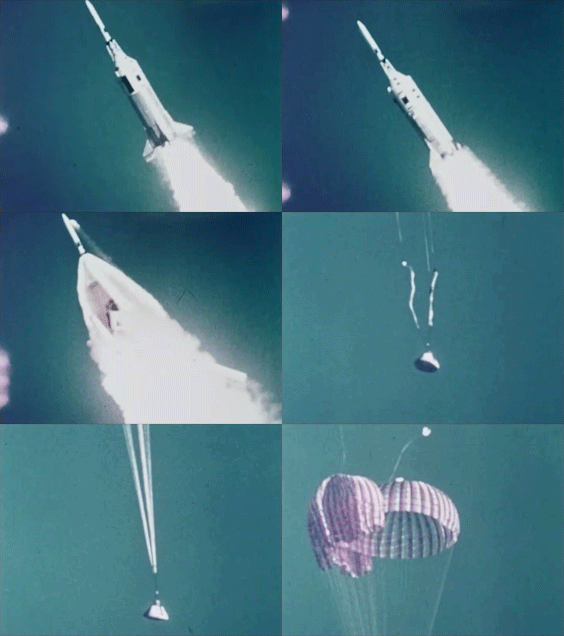
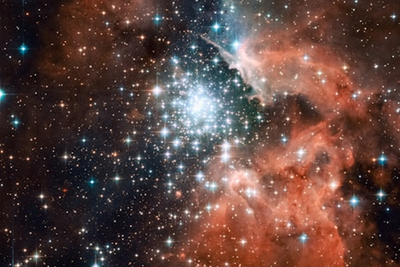
Some of space's greatest images aren't engineering at all. Capsules bobbing like beach toys, rockets reduced to clean geometry, a night sky that swirls like a painting. This collection is where our designers put down the blueprints and play — the same hardware, seen through a sunnier lens.

SHOP Novelty, Animals & Abstract Space COLLECTION

SHOWING 8 OUT OF 8 PRODUCTS
From the flight records

Novelty, by the numbers

Figure 2-1NASA SP-39
Animal couch in the Mercury spacecraft
16 MINMR-2 - 31 JAN 1961

Ham rode sealed in a pressurized couch, pulling levers for banana pellets the whole way.

Animal couch in the Mercury spacecraft

Figure 6-4NASA SP-39
Heart and respiration rates, MR-2
T+9:35PEAK RE-ENTRY LOAD

His heart, breathing and g-load for the whole flight. The sharp spike on the bottom line is the ride home.

Heart and respiration rates, MR-2

Miss Baker - Jupiter AM-18
360 MILES
Straight up, with Able - 16 minutes, both came home
28 MAY 1959
ABMA - HUNTSVILLE
Figure 6-5NASA SP-39
Telemetered ECG and respiration
WEIGHTLESSMR-2 TELEMETRY - 31 JAN 1961
steady - Ham, 31 Jan 61

Not a re-creation: Ham's heartbeat and breathing while he floated, exactly as the recorder drew them.

Telemetered ECG and respiration

DID YOU KNOW?
AIR FORCE MISSILE DEVELOPMENT CENTER
AEROMEDICAL FIELD LABORATORY

FLIGHT SURGEON'S NOTEBOOK - PASSENGERS OF RECORD

FRUIT FLIES, MONKEYS, DOGS, A CAT, TWO TORTOISES AND TWO SPIDERS - AND A CAMERA THAT LOOKED BACK
COMPILED 1947 - 1990

Before Shepard, somebody else went first. The notebook of the ones who flew so that people could: who they were, what they rode, and what they taught the doctors on the ground.

PREPARED BY
AEROMEDICAL FIELD LABORATORY
REPRINTED FOR CAPE KENNEDY CLOTHING
Artie RedstoneVeterinary Officer
Max QFlight Surgeon
Turn the page →
AEROMEDICAL

Figure 2-1THE ANIMAL COUCH

HOLLOMAN
THE ANIMAL COUCH
Tap the drawing to enlarge

Where Ham actually rode. Not loose in the cabin: sealed in a pressurized couch, a contoured box bolted into the Mercury spacecraft where an astronaut would later sit. A lever panel sat in front of him, and the couch kept its own air in case the capsule lost pressure.

  1. 1Mercury-Redstone - the same booster and escape tower that flew Alan Shepard three months later.
  2. 2The Mercury spacecraft - a production capsule, not a mock-up. MR-2 was a dress rehearsal for a man.
  3. 3The couch inside the cabin - mounted where the pilot's couch would go.
  4. 4Animal couch - a pressurized, contoured shell with its own atmosphere, separate from the cabin.
MR-2
Date31 Jan 1961
BoosterMercury-Redstone
PassengerHam, chimpanzee No. 65
Flight timeabout 16.5 min
Couchpressurized, own air supply

Source: Results of the Project Mercury Ballistic and Orbital Chimpanzee Flights, NASA SP-39, 1963.

MissionPASSENGERS
EditionFINAL
Date1947 - 1990
TimeT-00:00
Day/Rev-
Page5
Aeromedical Field Laboratory - Holloman AFB, N.M.
AEROMEDICAL

DID YOU KNOW?NOTEBOOK ENTRIES

HOLLOMAN

Miss Baker Comes Home

In 1959, squirrel monkey Miss Baker rode a Jupiter missile 300 miles up and splashed down unharmed — then answered fan mail for decades.

Jupiter AM-18 from LC-26B - the museum pad

Staring at Nothing

In 1995, Hubble stared at a blank patch of sky for ten straight days. Hiding in the darkness: some 3,000 galaxies.

Hubble Deep Field, ten days

The Pale Blue Dot

Voyager 1 turned its camera home from 3.7 billion miles out. Earth was less than a single pixel — every story ever told, in one point of light.

Voyager 1, 3.7 billion miles out
MissionPASSENGERS
EditionFINAL
Date1947 - 1990
Time
Day/Rev-
Page1
Aeromedical Field Laboratory - Holloman AFB, N.M.
AEROMEDICAL

Figure 6-4HEART AND BREATHING, MR-2

HOLLOMAN
HEART AND BREATHING, MR-2
Tap the drawing to enlarge

Sixteen minutes of a chimpanzee's pulse, breathing and g-load, read off the telemetry ten seconds at a time. The bottom line is the ride: one spike for launch, a flat weightless coast, and a sharper spike coming home. His heart answered each one, and both rates dropped back to preflight values during the weightless stretch.

  1. 1Respiration, breaths per minute - counted from the telemetered trace.
  2. 2Heart rate peaks just after re-entry, then falls back toward preflight values.
  3. 3Launch - g builds until the Redstone shuts down, a little over two minutes in.
  4. 4The flat stretch - the weightless coast between the two spikes.
  5. 5Re-entry - the sharpest load of the flight, at about T+9:35.
Physiology
Measuredheart rate, respiration, g
Sampling10-second intervals
Peak loadre-entry, about T+9:35
Time axisminutes from launch

Source: Results of the Project Mercury Ballistic and Orbital Chimpanzee Flights, NASA SP-39, 1963.

MissionPASSENGERS
EditionFINAL
Date1947 - 1990
TimeT+00:00
Day/Rev-
Page28
Aeromedical Field Laboratory - Holloman AFB, N.M.
AEROMEDICAL

Section VIPASSENGERS OF RECORD

HOLLOMAN

Ten flights, in order. The ones from Cape Canaveral are marked with their pad.

PassengerDateVehicleFlightNote
Fruit flies 20 Feb 1947 V-2 - White Sands 68 miles The first living things in space; parachuted back alive
Albert II 14 Jun 1949 V-2 - White Sands 83 miles First mammal in space, a rhesus monkey; the parachute failed
Laika 3 Nov 1957 Sputnik 2 Orbit First animal to orbit Earth; there was no plan to bring her home
Able and Baker 28 May 1959 Jupiter AM-18 - LC-26B 300 miles, 16 min First animals the U.S. recovered alive from space - a rhesus and a squirrel monkey, from the Cape
Belka and Strelka 19 Aug 1960 Sputnik 5 1 day, 17 orbits First to orbit and return alive; Strelka's puppy was given to the Kennedys
Ham 31 Jan 1961 Mercury-Redstone 2 - LC-5 16 min 39 sec Flew the Mercury capsule before Shepard did; worked his levers at 14.7 g
Enos 29 Nov 1961 Mercury-Atlas 5 - LC-14 2 orbits Cleared the Atlas for John Glenn
Felicette 18 Oct 1963 Veronique AG1 - Hammaguir 13 min The first cat in space, and the only one to survive it - French, with electrodes in her skull, recovered alive
Tortoises 15 - 21 Sep 1968 Zond 5 Circumlunar The first living things around the Moon, three months before Apollo 8
Arabella and Anita Jul - Sep 1973 Skylab 3 59 days Two garden spiders; their webs were finer but complete

Miss Baker lived to 27 at the U.S. Space and Rocket Center in Huntsville. Ham lived to about 26 at the North Carolina Zoo. Able died four days after her flight, from the anesthetic for electrode removal.

MissionPASSENGERS
EditionFINAL
Date1947 - 1990
Time1947 - 1973
Day/Rev-
Page2
Aeromedical Field Laboratory - Holloman AFB, N.M.
AEROMEDICAL

Figure 6-5THE RECORDER TRACE

HOLLOMAN
THE RECORDER TRACE
Tap the drawing to enlarge

The real paper. This is a strip of Ham's telemetry during the weightless part of MR-2, printed in the report exactly as the recorder drew it: breathing on top, two heart leads in the middle, body temperature at the bottom. The marks across the top flag the weightless period.

  1. 1Weightlessness marker - the event channel that flags the zero-g part of the flight.
  2. 2Respiration - slow, even breaths while floating.
  3. 3ECG 1 - the first heart lead, every spike one beat.
  4. 4ECG 2 - the second lead, a cross-check on the first.
  5. 5Body temperature - a nearly flat line, which was the point.
Recorder
Channels5
Signaltelemetered from the capsule
Periodweightless phase
Altitudeabout 100 n. mi

Source: Results of the Project Mercury Ballistic and Orbital Chimpanzee Flights, NASA SP-39, 1963.

MissionPASSENGERS
EditionFINAL
Date1947 - 1990
TimeZERO G
Day/Rev-
Page29
Aeromedical Field Laboratory - Holloman AFB, N.M.
AEROMEDICAL

Figure 9-3ENOS IN ORBIT, MA-5

HOLLOMAN
ENOS IN ORBIT, MA-5
Tap the drawing to enlarge

Two hours and eighteen minutes into the second U.S. orbital flight, the passenger was still at work. Enos, a chimpanzee, flew two orbits on Mercury-Atlas 5 in November 1961, less than three months before John Glenn, solving lever tasks while catheters read his blood pressure straight off the arteries.

  1. 1Respiration trace.
  2. 2ECG 1 and ECG 2 - two heart leads.
  3. 3The arrows - premature heartbeats, harmless and brief, noted by the flight surgeons.
  4. 4CA-DA - the running count of right-hand lever presses on his avoidance task.
  5. 5Arterial pressure - systemic (SA) and pulmonary (PA), measured directly through catheters.
  6. 6One-second timer - the clock the whole record is read against.
MA-5
Date29 Nov 1961
BoosterAtlas
PassengerEnos
Orbits2
Record timeT+138 min

Source: Results of the Project Mercury Ballistic and Orbital Chimpanzee Flights, NASA SP-39, 1963.

MissionPASSENGERS
EditionFINAL
Date1947 - 1990
TimeT+02:18
Day/Rev-
Page41
Aeromedical Field Laboratory - Holloman AFB, N.M.
AEROMEDICAL

Section IVHAM - MR-2 FLIGHT TASK

HOLLOMAN

Mercury-Redstone 2, January 31, 1961, LC-5

Tick through the flight of Chimpanzee No. 65, who got his name only after he came back.

Tap a box to check it off

Items complete 0/8SPECIMEN RECOVERED
MissionPASSENGERS
EditionFINAL
Date1947 - 1990
Time11:55 - 12:12 EST
Day/Rev-
Page3
Aeromedical Field Laboratory - Holloman AFB, N.M.
AEROMEDICAL

Figure 3-1THE ANIMAL VAN COMPLEX

HOLLOMAN
THE ANIMAL VAN COMPLEX
Tap the drawing to enlarge

The chimps did not live at the pad. They came to the Cape in a village of trailers: a medical van, caging vans, a training van with its own Mercury spacecraft mock-up, and a transfer van to carry the passenger to the rocket. Each van was 28 by 8 feet.

  1. 1Medical van - surgical table, X-ray, centrifuge and lab benches.
  2. 2Caging van - where the animals lived between sessions.
  3. 3Training van - a Mercury training spacecraft and psychomotor cubicles for practice runs.
  4. 4Transfer van - the ride from the complex to the launch pad.
  5. 5House trailer - for the crew who looked after them.
Complex
Used forMR-2 and MA-5
Van size28 x 8 ft
Unitsmedical, caging, training, transfer
Training aidMercury spacecraft mock-up

Source: Results of the Project Mercury Ballistic and Orbital Chimpanzee Flights, NASA SP-39, 1963.

MissionPASSENGERS
EditionFINAL
Date1947 - 1990
TimePRE-LAUNCH
Day/Rev-
Page8
Aeromedical Field Laboratory - Holloman AFB, N.M.
AEROMEDICAL

Section ITERMS IN THE NOTEBOOK

HOLLOMAN
AeromedicalThe branch of medicine that put animals, then people, into flight
Holloman AFBThe Air Force base in New Mexico where the chimpanzee colony trained
BiopackThe sealed, pressurized container a passenger rode in
Psychomotor taskA lever-and-light test to prove a passenger could think and act in flight
TelemetryHeart, breathing and temperature radioed to the ground
gOne Earth gravity; Ham took 14.7, Miss Baker 38
WeightlessThe part of the flight the doctors could not test on the ground
Nose coneThe Jupiter payload section Able and Baker rode in - recovered by the USS Kiowa
Dye markerThe green stain released at splashdown so the helicopters could find a capsule
Deep FieldHubble's ten-day stare at nothing in 1995 - about 3,000 galaxies in a speck of sky
Pale Blue DotEarth from 3.7 billion miles, Voyager 1, February 14, 1990
CatstronautSee: Felicette. And the shirts.
MissionPASSENGERS
EditionFINAL
Date1947 - 1990
Time-
Day/Rev-
Page4
Aeromedical Field Laboratory - Holloman AFB, N.M.