


-
Age of The Titan Hawaiian Shirt
Regular price $39.99 USDRegular price -


SHOWING 2 OUT OF 2 PRODUCTS
GiGi checked the manifest twice — the payload bay is still empty.
Unlock the Vault to get up to −10% off
Members get access to exclusive drops & special discounts
Unlock




Browse by mission, era, or program

Drag to spin
Fueling up…
The machine behind the mission
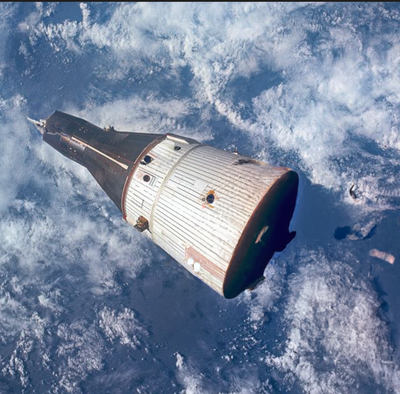
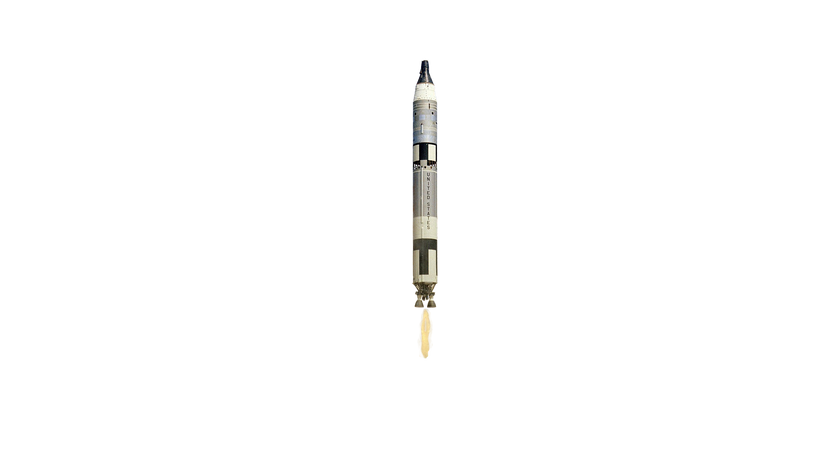
Two seats, an onboard computer and a docking target. Gemini is where America learned to rendezvous, spacewalk and stay up for two weeks — the dress rehearsal for the Moon.


Ten crewed flights in twenty months taught Apollo everything it couldn't fly without: rendezvous, docking, spacewalking, endurance. Spaceflight stopped being a stunt and became a discipline.
No lunar landings, no famous quotes — just relentless skill-building where America pulled ahead. Our Gemini collection respects the rehearsal behind the glamorous leap.


Two men side by side in a cabin the size of a sports car front seat.
Spacecraft - pre-launch configuration

Ed White on a 25-foot golden umbilical. He did not want to come back in.
Typical use of EVA equipment

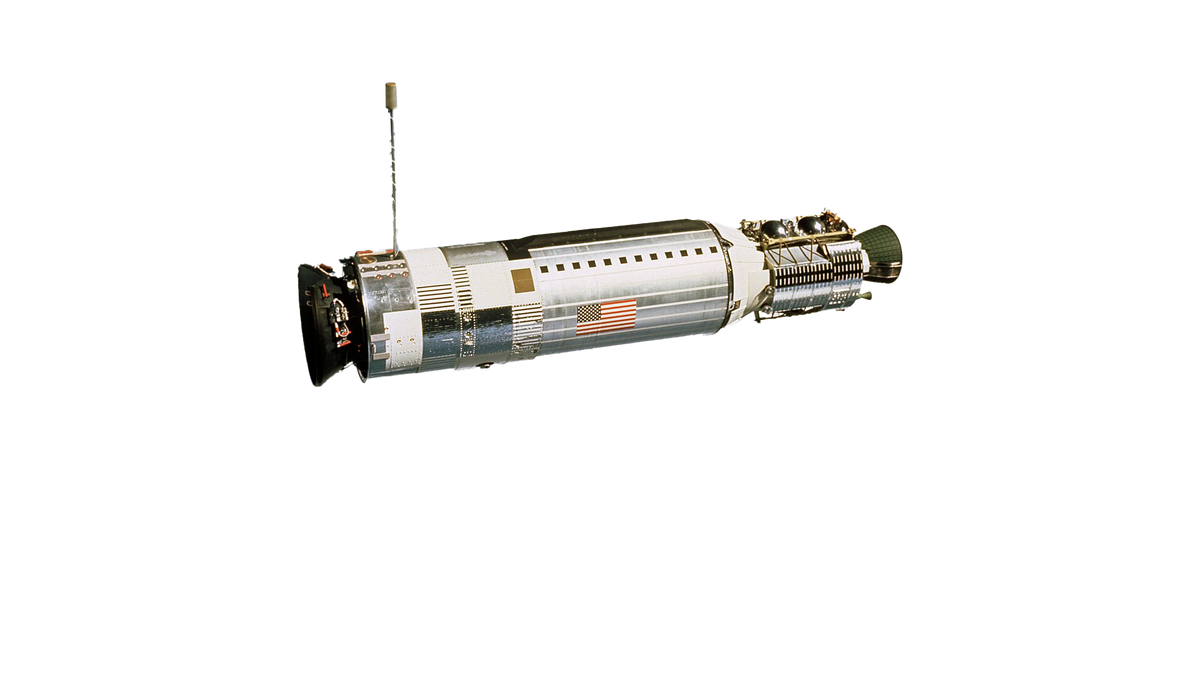
The nose slid into the Agena cone and three latches caught: the first docking in space. Within the hour a stuck thruster had them tumbling.
Docking system
Ten crewed flights in twenty months. Rendezvous, docking, spacewalking, two weeks in a front seat. Drawings in this book are from the McDonnell familiarization manual the crews trained on. This book is the record.

Nineteen feet long, 7,000 to 8,300 pounds depending on the flight, two men side by side. Gemini was built in sections that came apart on purpose: the adapter stayed in orbit, the retro section burned off, and only the re-entry module came home under the parachute.
Source: NASA Project Gemini Familiarization Manual, SEDR 300 Vol. II, McDonnell, 1 July 1966.

Gemini carried a 59-pound onboard computer with less memory than a short email — and flew orbital rendezvous with it.

John Young smuggled a corned beef sandwich aboard Gemini 3. Crumbs floated everywhere — and It came up in a House appropriations hearing.

When a docking target's nose cone jammed half-open, the crew radioed that it looked like an angry alligator.
The name stuck.

The front seat of a sports car, the engineers said, and they were not joking. Two ejection seats, two hatches, an instrument panel each and a center console they shared. Everything the crew touched for up to fourteen days is on this drawing.
Source: NASA Project Gemini Familiarization Manual, SEDR 300 Vol. II, McDonnell, 1 July 1966.

Every switch, gauge and circuit breaker in the Gemini cockpit, drawn flat. The left panel belongs to the command pilot, the right to the pilot, and the long center console between them carries the computer and the systems both men needed.
Source: NASA Project Gemini Familiarization Manual, SEDR 300 Vol. II, McDonnell, 1 July 1966.
Every crewed Gemini flight, in order. Durations are hours:minutes, the way the flight plan counts them.
| Flight | Date | Crew | Duration | Event |
|---|---|---|---|---|
| GT-3 | 23 Mar 1965 | Grissom / Young | 04:52 | First crewed Gemini; first orbit change flown by a crew |
| GT-4 | 3 - 7 Jun 1965 | McDivitt / White | 97:56 | First U.S. spacewalk - Ed White, about 20 minutes outside |
| GT-5 | 21 - 29 Aug 1965 | Cooper / Conrad | 190:55 | Eight days in orbit; first fuel cells in a crewed spacecraft |
| GT-7 | 4 - 18 Dec 1965 | Borman / Lovell | 330:35 | Fourteen-day endurance flight; target for GT-6A |
| GT-6A | 15 - 16 Dec 1965 | Schirra / Stafford | 25:51 | First rendezvous in space - held station with GT-7 to within a foot |
| GT-8 | 16 Mar 1966 | Armstrong / Scott | 10:41 | First docking (Agena); stuck thruster forced an early landing |
| GT-9A | 3 - 6 Jun 1966 | Stafford / Cernan | 72:21 | The Angry Alligator; Cernan EVA 2h 07m |
| GT-10 | 18 - 21 Jul 1966 | Young / Collins | 70:47 | Docked Agena used to boost to a 763 km record altitude |
| GT-11 | 12 - 15 Sep 1966 | Conrad / Gordon | 71:17 | First-orbit rendezvous; 1,369 km altitude record; tethered flight |
| GT-12 | 11 - 15 Nov 1966 | Lovell / Aldrin | 94:35 | Aldrin - 5h 30m of EVA; spacewalking finally solved |
Gemini 1 and 2 flew uncrewed. Gemini 6 was renamed 6A after its Agena target was lost on launch.

How two vehicles become one. Gemini's nose slid into the Agena's docking cone, three latches caught, and the cone drew the spacecraft in and locked it rigid. Neil Armstrong and Dave Scott did it first on Gemini VIII.
Source: NASA Project Gemini Familiarization Manual, SEDR 300 Vol. II, McDonnell, 1 July 1966.

The Angry Alligator, as drawn before it got its name. The ATDA was a docking cone on a short equipment section, built as a stand-in when Agenas were lost. On Gemini IX-A the shroud never came off, the jaws hung half open, and Tom Stafford radioed the description that stuck.
Source: NASA Project Gemini Familiarization Manual, SEDR 300 Vol. II, McDonnell, 1 July 1966.
B. Test requirements - Gemini IV, 3 June 1965
Tick each item as you read it. This is the sequence Ed White and Jim McDivitt flew on the first American spacewalk; the equipment is in Section XVI of the manual.
Tap a box to check it off

The manual's own picture of a man outside. Chest pack, umbilical, hand-held maneuvering unit, gold visor - everything on this drawing was learned the hard way between Ed White's twenty minutes on Gemini IV and Buzz Aldrin's five and a half hours on Gemini XII.
Source: NASA Project Gemini Familiarization Manual, SEDR 300 Vol. II, McDonnell, 1 July 1966.
Negative. No matching term in this edition.