Project Mercury
COLLECTION
Project MercuryCOLLECTION

Browse by mission, era, or program

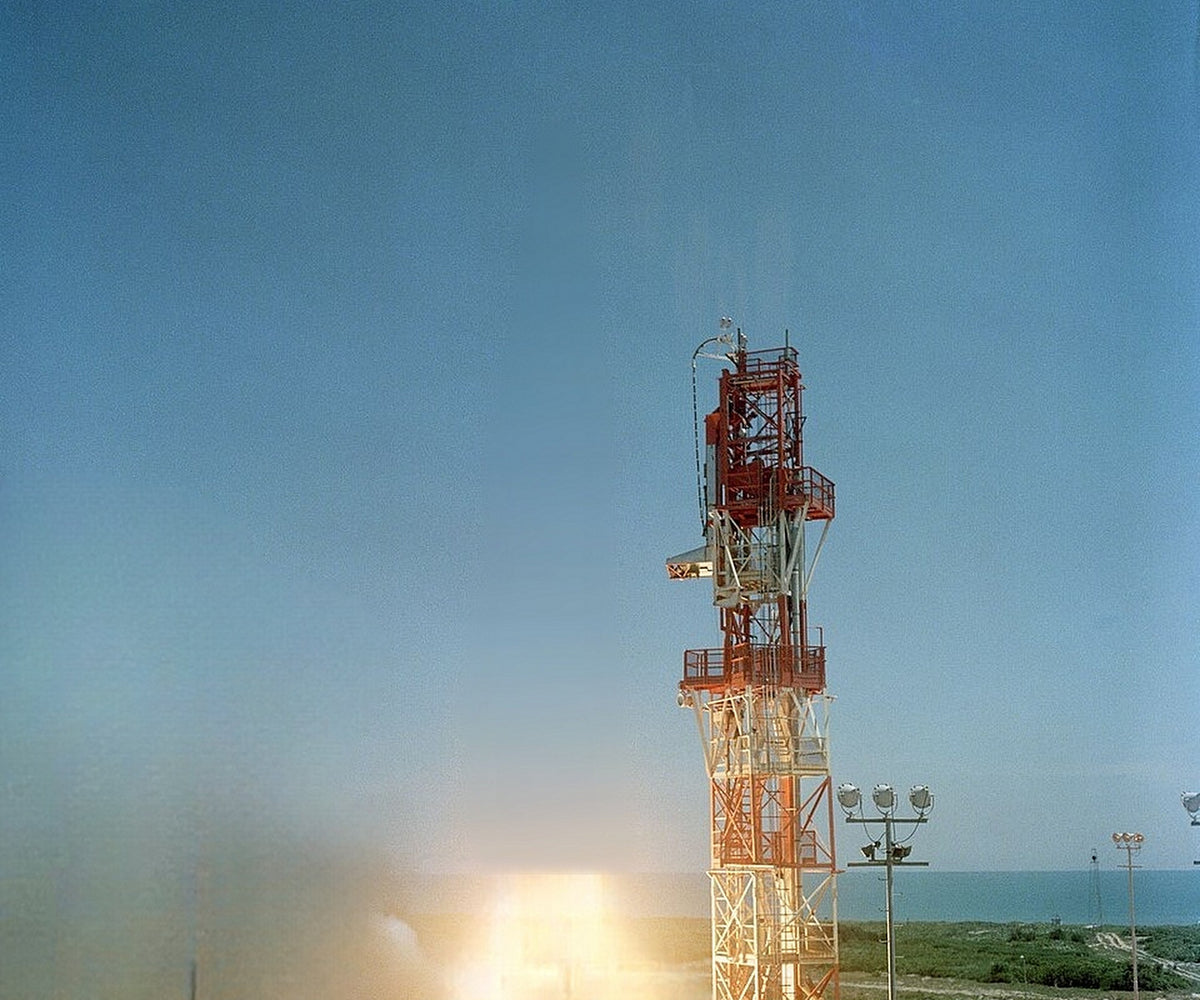
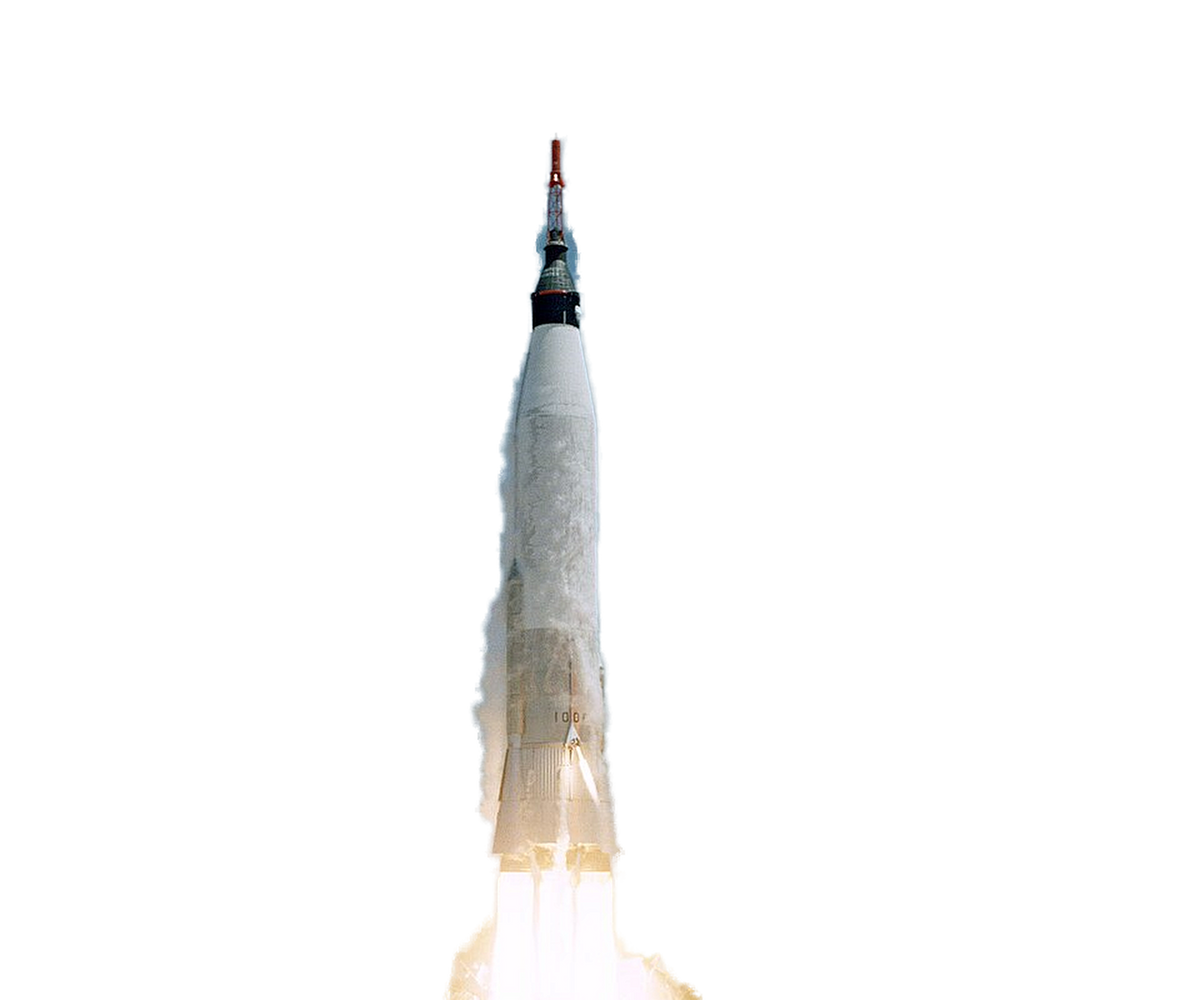
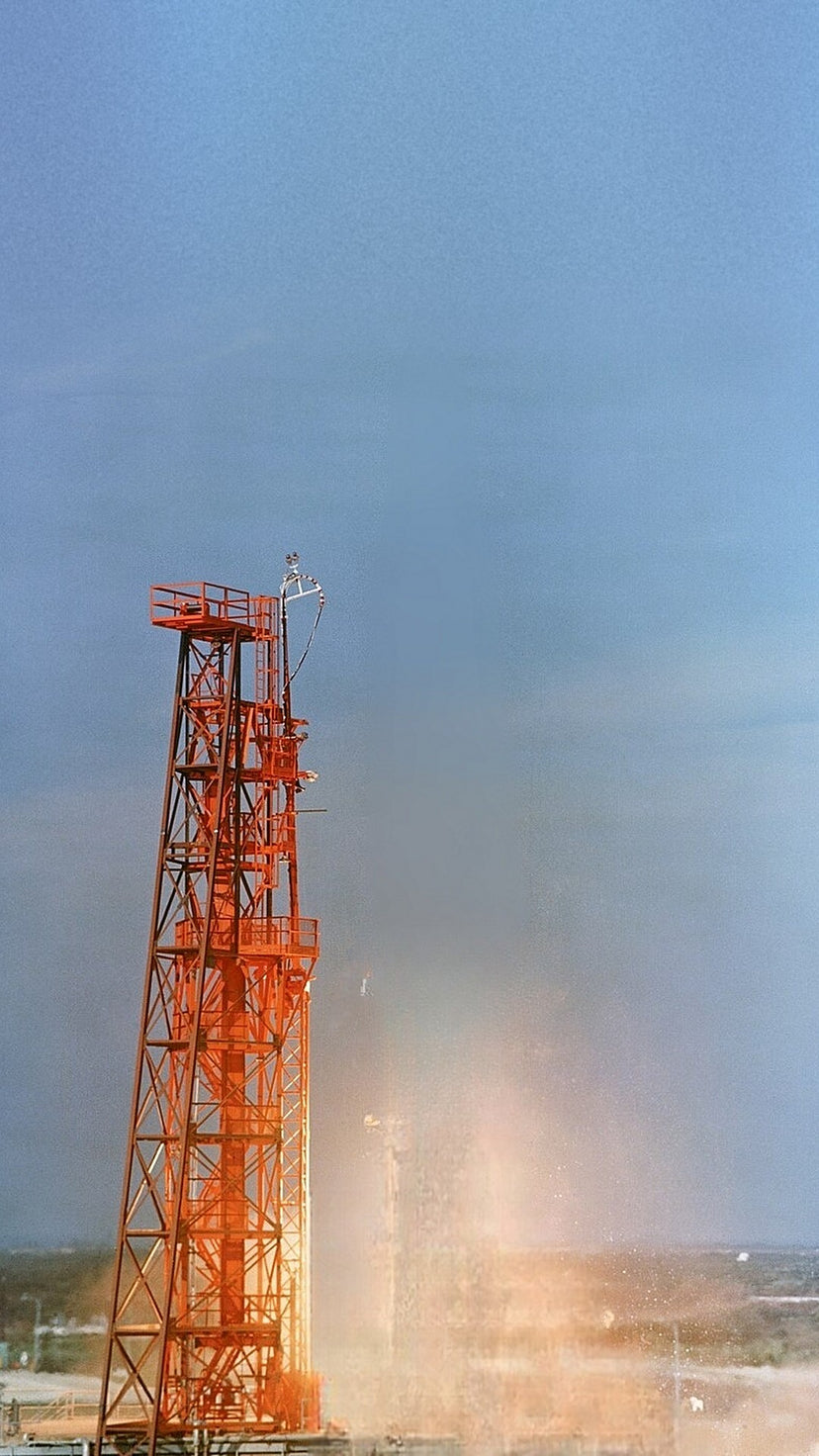
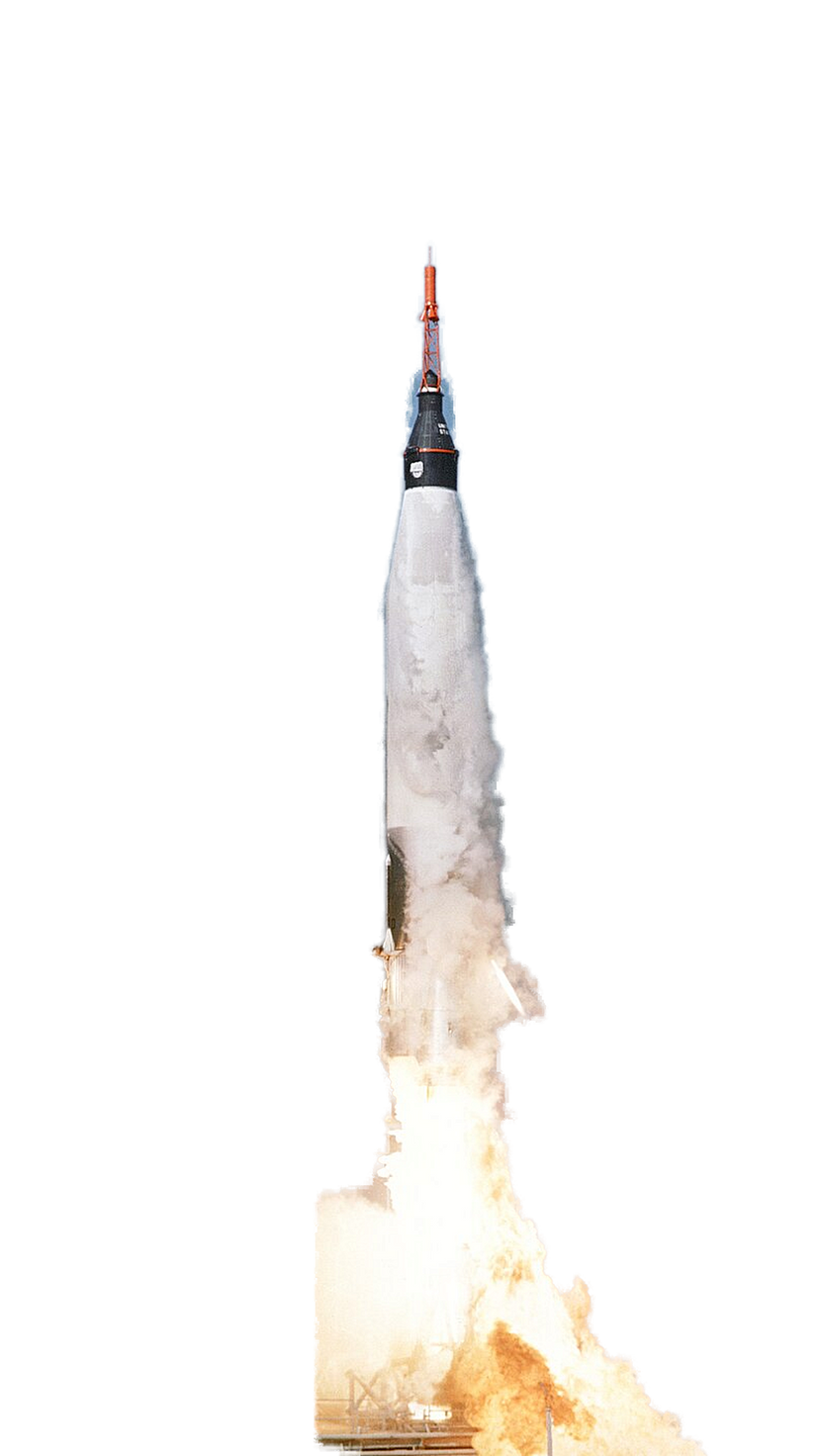
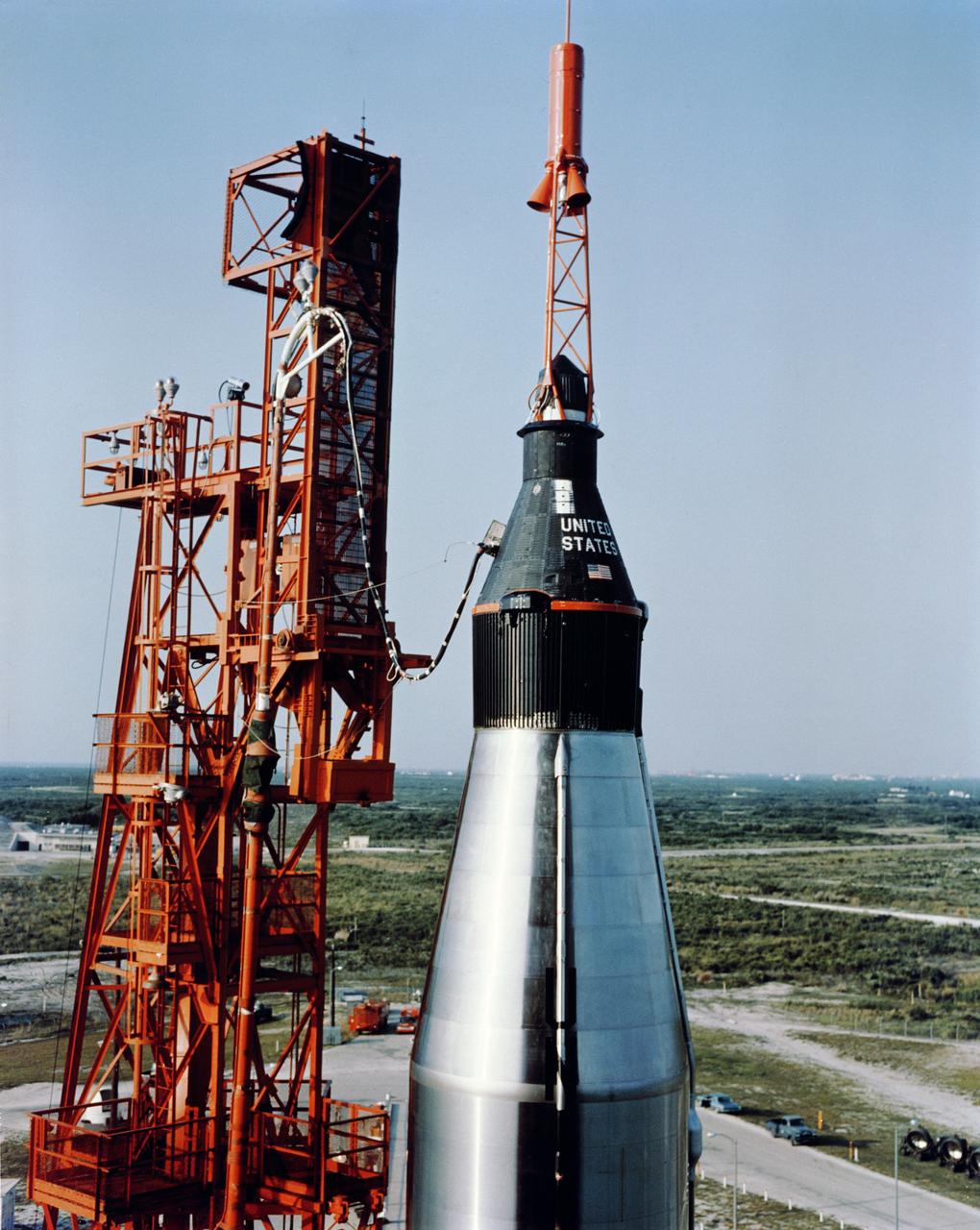
Mercury-Redstone

The machine behind the mission

Mercury-Redstone

  • 1960–1961
  • 2 crewed suborbital flights
  • Launched from LC-5, Cape Canaveral

America's first ride to space: a modified Army Redstone missile with a one-seat capsule on top. Up past the edge of space and back down to the Atlantic in about 15 minutes — the flights that started it all on the Space Coast.

Shop the Mercury shirts

THE FIRST QUESTION

Mercury asked the question that started everything: can a human survive in space? Six crewed flights answered — one seat, one window, a repurposed missile. In 1961 the first American reached space; a year later, one circled the Earth.

WHERE IT ALL BEGAN

Our Mercury collection honors the courage of first steps — the blunt-body capsule still guides every spacecraft flying today. The impossible is merely difficult.

SHOP Project Mercury COLLECTION

SHOWING 3 OUT OF 3 PRODUCTS
Conference papers - MR-3, June 1961

Mercury, by the numbers

Figure 1C. C. KRAFT, JR.
Flight plan for the MR-3 manned flight
15 MINMR-3 - 5 MAY 1961

The whole flight on one arc: 116 miles up, 302 miles downrange, five minutes of weightlessness.

Flight plan for the MR-3 manned flight

Figure 5BIOMEDICAL SYSTEMS
The astronaut couch
11 GRE-ENTRY - 08:20

Why he lay on his back. Taken through the chest, a man can take 11 g and keep reading instruments.

The astronaut couch

Figure 3SPACECRAFT SYSTEMS
Internal arrangement
100 PCT O2CABIN AT 5.5 PSI

One man on his back, the periscope between his knees, pure oxygen at a third of sea-level pressure.

Internal arrangement

DID YOU KNOW?
UNITED STATES
NATIONAL AERONAUTICS AND SPACE ADMINISTRATION

CONFERENCE ON MEDICAL RESULTS OF THE FIRST U.S. MANNED SUBORBITAL SPACE FLIGHT

A COMPILATION OF THE PAPERS PRESENTED - IN COOPERATION WITH THE NATIONAL INSTITUTES OF HEALTH AND THE NATIONAL ACADEMY OF SCIENCES
JUNE 6, 1961 - WASHINGTON, D.C.

One month after Freedom 7, the doctors, engineers and the pilot himself stood up in the State Department auditorium and said what they had learned. This is their file: the flight plan, the spacecraft, the sensors taped to Alan Shepard, and what his body did for fifteen minutes and twenty-two seconds.

REPRINTED FOR
CAPE KENNEDY CLOTHING
PORT ST. JOHN, FLORIDA
Artie RedstoneAstronaut Flight Surgeon
Max QSpace Task Group
Turn the page →
NASA - STG

Figure 1 - Flight Plan for the MR-3 Manned Flight (C. C. Kraft, Jr.)MR-3 FLIGHT

MR-3
MR-3 FLIGHT
Tap the drawing to enlarge

The whole flight on one arc, the way Chris Kraft drew it for the conference. Liftoff 9:34 a.m. EST, May 5, 1961. Fifteen minutes and twenty-two seconds later Freedom 7 was in the Atlantic, 302 miles downrange.

  1. 1Liftoff 0:00 - 9:34 a.m. EST, after a hold of 2 hours 34 minutes. The pilot had been on his back in the capsule since 5:20.
  2. 2Max q, 1:24 - maximum aerodynamic pressure. The cabin sealed at about 5.5 psi.
  3. 3Launch vehicle cutoff and tower separation, 2:22 - 7,388 ft/sec, 5,036 mph. Then five minutes of weightlessness.
  4. 4Manual control, 3:10 - Shepard turned off the autopilot and flew the attitude himself, the first American to do it.
  5. 5Retrofire, 5:14 - three rockets, five seconds apart, ten seconds each, fired at the top of the arc.
  6. 60.05 g, 7:48 - the first feel of air at 200,000 feet. The re-entry pulse peaked at 11 g at 8:20.
  7. 7Main chute, 10:15 - at 10,000 feet. Shepard watched it unreef through the periscope and called it "smooth and welcome."
MR-3 numbers
Liftoff9:34 a.m. EST
Max velocity5,036 mph
Max altitude116.5 st. mi
Range302 st. mi
Weightlessabout 5 min
Max g6.2 launch, 11 re-entry
Duration15 min 22 sec

Source: Conference on Medical Results of the First U.S. Manned Suborbital Space Flight, NASA / NIH / NAS, June 6, 1961.

MissionMR-3
EditionFINAL
DateMAY 5, 1961
Time0:00 - 15:22
Day/Rev-
Page12
NASA - Langley Field, Va.
NASA - STG

Figure 2 - Flight Plan for the MR-3 Manned FlightMR-3 GROUND TRACK AND FLIGHT PROFILE

MR-3
MR-3 GROUND TRACK AND FLIGHT PROFILE
Tap the drawing to enlarge

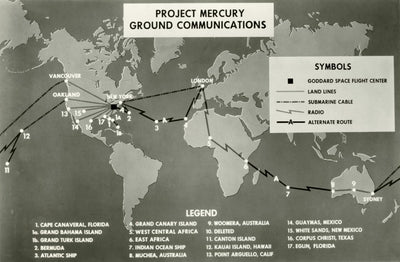
Up from the Cape, over the Bahamas, down in the Atlantic. The computer at cutoff predicted the landing point within three miles of where the helicopters found the capsule - and the carrier Lake Champlain was already waiting.

  1. 1Cape Canaveral - Launch Complex 5, the Redstone pad. The blockhouse still stands at LC-5/6.
  2. 2Max velocity 7,388 ft/sec - 5,036 mph at launch-vehicle cutoff.
  3. 3Max altitude 116.5 statute miles, reached 5 minutes 11 seconds after liftoff.
  4. 4Total range 302 statute miles, downrange to the east-southeast.
  5. 5Landing point - computed 75 deg 51 min W, 27 deg 12 min N; actual within 2 minutes of longitude.
  6. 6Bahama Islands - Grand Bahama was where Shepard spent two days of debriefing afterward.
Landing point
Computed75 51 W / 27 12 N
Actual75 53 W / 27 13.7 N
Errorunder 3 miles
RecoveryUSS Lake Champlain

Source: Conference on Medical Results of the First U.S. Manned Suborbital Space Flight, NASA / NIH / NAS, June 6, 1961.

MissionMR-3
EditionFINAL
DateMAY 5, 1961
TimeRECOVERY
Day/Rev-
Page12
NASA - Langley Field, Va.
NASA - STG

DID YOU KNOW?NOTES ON THE MR-3 FLIGHT

MR-3

Seven of 110

NASA screened 110 elite test pilots and chose seven — the Mercury Seven became celebrities before a single one had flown.

Countdown opened 8:30 a.m. EST, May 4

Worn, Not Flown

The capsule was so snug astronauts joked you didn't board it, you put it on — every switch within arm's reach.

Insertion begun, 5:20 a.m. - 4 hours 14 minutes before liftoff

The Escape Tower

A small rocket rode atop every Mercury capsule, ready to pull the astronaut clear of an exploding booster in under a second.

Tower jettisoned at cutoff, T plus 2 min 22 sec
MissionMR-3
EditionFINAL
DateMAY 5, 1961
TimeMAY 4 - 5, 1961
Day/Rev-
Page7
NASA - Langley Field, Va.
NASA - STG

Figure 1 - Mercury Spacecraft Systems (A. C. Bond)SPACECRAFT AND ESCAPE SYSTEM CONFIGURATION

MR-3
SPACECRAFT AND ESCAPE SYSTEM CONFIGURATION
Tap the drawing to enlarge

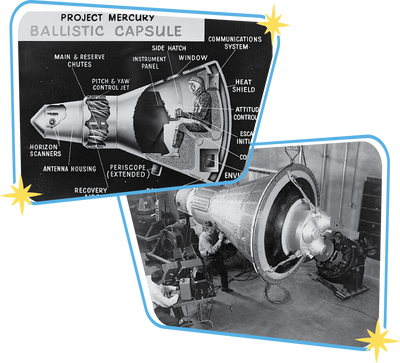
The whole stack above the booster: escape rocket and tower on top, the capsule with its antenna canister and recovery compartment, the shingled afterbody, the heat shield and the retropack strapped to its face.

  1. 1Escape rocket - solid-fuel, built to pull the capsule clear of an exploding Redstone or Atlas in about a second.
  2. 2Escape tower - jettisoned at booster cutoff, 2 minutes 22 seconds into MR-3.
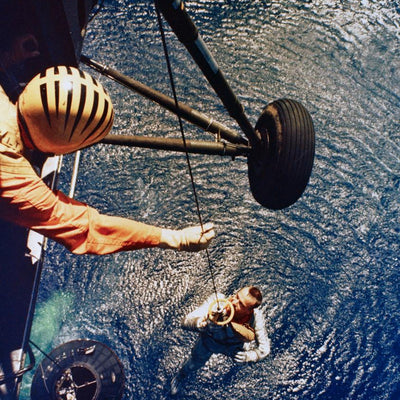
  3. 3Hatch - the side hatch. On MR-3 it was bolted; Shepard climbed out through it once the helicopter had the capsule on the hook, then went up in the sling.
  4. 4Retropack - three retrorockets held on by straps, fired at the top of the arc and jettisoned 60 seconds later.
  5. 5Antenna canister - radio antennas, the drogue parachute and the destabilizing flap.
  6. 6Recovery compartment - main and reserve parachutes.
  7. 7Shingles - overlapping heat-resistant panels on the afterbody, like a roof.
  8. 8Heat shield - ablative, the blunt face that led the way home.
Spacecraft
BuilderMcDonnell
Crew1
BoosterRedstone (MR) / Atlas (MA)
Escape rocketsolid fuel
Retrorockets3

Source: Conference on Medical Results of the First U.S. Manned Suborbital Space Flight, NASA / NIH / NAS, June 6, 1961.

MissionMR-3
EditionFINAL
DateMAY 5, 1961
TimeLAUNCH
Day/Rev-
Page23
NASA - Langley Field, Va.
NASA - STG

Figure 3 - Mercury Spacecraft SystemsSPACECRAFT INTERNAL ARRANGEMENT

MR-3
SPACECRAFT INTERNAL ARRANGEMENT
Tap the drawing to enlarge

The pilot lay on his back on a couch moulded to his body, facing the instrument panel, with the periscope between his knees. "You don't get in it," the astronauts said, "you put it on."

  1. 1Hatch - beside the pilot's left shoulder.
  2. 2Pitch and yaw jets - hydrogen peroxide thrusters for attitude; Shepard flew them by hand from 3:10.
  3. 3Drogue chute - deployed at 21,000 feet to steady the capsule before the main.
  4. 4Horizon scanners - infrared sensors that told the autopilot which way was down.
  5. 5Main and reserve chutes - the reserve was there if the main failed; it never had to fly.
  6. 6Periscope - the pilot's window on the world, retracted before re-entry.
  7. 7Roll jets - the third axis of the attitude system.
  8. 8Couch - fibreglass, cast to the individual astronaut.
Cabin
Crew positionon back
Attitude controlH2O2 jets
Windowperiscope + 2 ports
Cabin atmosphere100 pct O2

Source: Conference on Medical Results of the First U.S. Manned Suborbital Space Flight, NASA / NIH / NAS, June 6, 1961.

MissionMR-3
EditionFINAL
DateMAY 5, 1961
TimeORBIT
Day/Rev-
Page24
NASA - Langley Field, Va.
NASA - STG

Figure 7 - Mercury Spacecraft SystemsMAIN INSTRUMENT PANEL AND CONSOLES FOR MR-3 CAPSULE

MR-3
MAIN INSTRUMENT PANEL AND CONSOLES FOR MR-3 CAPSULE
Tap the drawing to enlarge

Everything Shepard could see from the couch. Flight instruments across the top, the periscope screen in the middle, sequence lights to tell him what the automatic systems had done - and the handles to do it himself if they had not.

  1. 1Left console - sequence and systems switches, within reach of the left hand.
  2. 2Sequence lights - a column of lamps that lit as each automatic event happened. Shepard checked every one.
  3. 3Flight instruments - attitude, rate, altitude, the g meter. Mercury pilots were test pilots and wanted a real panel.
  4. 4Periscope screen - the view outside, projected onto a screen between the instruments.
  5. 5Right console - environmental and communications controls.
Pilot workload
Manual controlfrom 3:10
Sequence lightschecked all
Observationsperiscope, 3:50
HF radio check6:14

Source: Conference on Medical Results of the First U.S. Manned Suborbital Space Flight, NASA / NIH / NAS, June 6, 1961.

MissionMR-3
EditionFINAL
DateMAY 5, 1961
TimeALL PHASES
Day/Rev-
Page26
NASA - Langley Field, Va.
NASA - STG

Section VIPROJECT MERCURY FLIGHT SUMMARY

MR-3

Every Mercury flight that carried a living passenger, in order. Durations are hours:minutes.

FlightDateCrewDurationEvent
MR-2 31 Jan 1961 Ham (chimpanzee) 00:17 Proved the capsule and the ride; Ham worked his levers at 17 g
MR-3 5 May 1961 Alan B. Shepard, Jr. 00:15 Freedom 7 - first American in space; this report
MR-4 21 Jul 1961 Virgil I. Grissom 00:16 Liberty Bell 7 - hatch blew early; the capsule sank, Grissom swam
MA-5 29 Nov 1961 Enos (chimpanzee) 03:21 Two orbits - cleared the Atlas for a man
MA-6 20 Feb 1962 John H. Glenn, Jr. 04:55 Friendship 7 - first American in orbit, three times around
MA-7 24 May 1962 M. Scott Carpenter 04:56 Aurora 7 - three orbits; landed 250 miles long
MA-8 3 Oct 1962 Walter M. Schirra, Jr. 09:13 Sigma 7 - six orbits, a textbook flight
MA-9 15 - 16 May 1963 L. Gordon Cooper, Jr. 34:20 Faith 7 - 22 orbits, flew re-entry by hand after the autopilot failed

MR = Mercury-Redstone, suborbital. MA = Mercury-Atlas, orbital. Ham and Enos were chimpanzees from Holloman AFB.

MissionMR-3
EditionFINAL
DateMAY 5, 1961
Time1961 - 1963
Day/Rev-
Page4
NASA - Langley Field, Va.
NASA - STG

Figure 5 - Review of Biomedical Systems (White, Johnston, Pesman)ASTRONAUT POSITION AND CRUSHABLE STRUCTURE

MR-3
ASTRONAUT POSITION AND CRUSHABLE STRUCTURE
Tap the drawing to enlarge

Why he lay on his back. With the acceleration coming through the chest, a man can take 11 g and keep reading instruments. Under the couch sat crushable aluminum honeycomb, the last line of defence if the landing was hard.

  1. 185 to 90 degrees - the thighs raised, so blood could not pool in the legs under high g.
  2. 210 to 12 degrees - the couch tilted so the force came through the chest, front to back.
  3. 3Cushioning - the couch was moulded to the individual astronaut in fibreglass.
  4. 4Crushable aluminum honeycomb - designed to crumple on a hard landing and absorb the shock.
  5. 5Acceleration - the arrow shows the direction of the load: launch and re-entry both pushed the pilot into the couch.
Loads
Launch6.2 g
Re-entry11 g at 8:20
Main chute shock3 to 4 g
Landing12 to 14 g (est.)

Source: Conference on Medical Results of the First U.S. Manned Suborbital Space Flight, NASA / NIH / NAS, June 6, 1961.

MissionMR-3
EditionFINAL
DateMAY 5, 1961
TimeRE-ENTRY
Day/Rev-
Page45
NASA - Langley Field, Va.
NASA - STG

Figure 3 - Review of Biomedical SystemsSUIT VENTILATION FLOW

MR-3
SUIT VENTILATION FLOW
Tap the drawing to enlarge

The Mercury pressure suit was a Navy high-altitude suit in silver. Oxygen came in at the waist, ran down the arms and legs through channels in the lining, and left at the helmet - carrying heat and sweat with it.

  1. 1Oxygen inlet port - at the waist, fed from the cabin environmental control system.
  2. 2Oxygen outlet port - flow left at the helmet after sweeping the body.
  3. 3Helmet - with a faceplate the pilot opened after the main chute, and a rubber neck dam for a water landing.
  4. 4Flow paths - the arrows show the ventilating air running to the extremities and back up the torso.
Suit
MakerB.F. Goodrich
TypeNavy Mark IV, modified
Cabin O2100 pct, 5.5 psi
Denitrogenation2 hours before launch

Source: Conference on Medical Results of the First U.S. Manned Suborbital Space Flight, NASA / NIH / NAS, June 6, 1961.

MissionMR-3
EditionFINAL
DateMAY 5, 1961
TimePRE-LAUNCH
Day/Rev-
Page44
NASA - Langley Field, Va.
NASA - STG

Section IVASTRONAUT PREPARATION SCHEDULE MR-3

MR-3

Table I - launch morning, May 5, 1961, Eastern Standard Time

Tick off the morning the way the flight surgeon did. Every item below is from the schedule in the conference papers.

Tap a box to check it off

Items complete 0/10GO FOR LAUNCH
MissionMR-3
EditionFINAL
DateMAY 5, 1961
Time0110 - 0934
Day/Rev-
Page77
NASA - Langley Field, Va.
NASA - STG

Section ITERMS USED IN THIS REPORT

MR-3
MRMercury-Redstone - the suborbital flights, launched from LC-5
MAMercury-Atlas - the orbital flights, launched from LC-14
STGSpace Task Group - the NASA team at Langley that ran Mercury
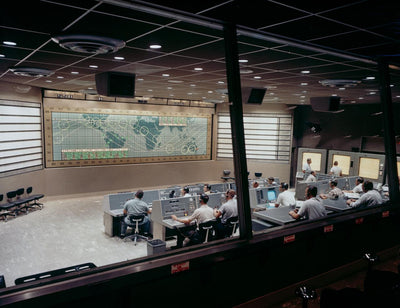
CAPCOMSpacecraft communicator in the Mercury Control Center - always another astronaut
STONEYSpacecraft communicator in the blockhouse
CTCSpacecraft test conductor in the blockhouse
TMTelemetry - the sensor data radioed to the ground
ECGElectrocardiogram - heart rhythm, from leads taped to the chest
Max qMaximum dynamic pressure - the hardest the air pushes back on the way up
gOne Earth gravity. MR-3 peaked at 11 g on re-entry
Freedom 7Shepard's call sign after liftoff; 7 for the seven astronauts
Cardfile 23Relay airplane in the vicinity of the Bahamas
MissionMR-3
EditionFINAL
DateMAY 5, 1961
Time-
Day/Rev-
Page114
NASA - Langley Field, Va.